




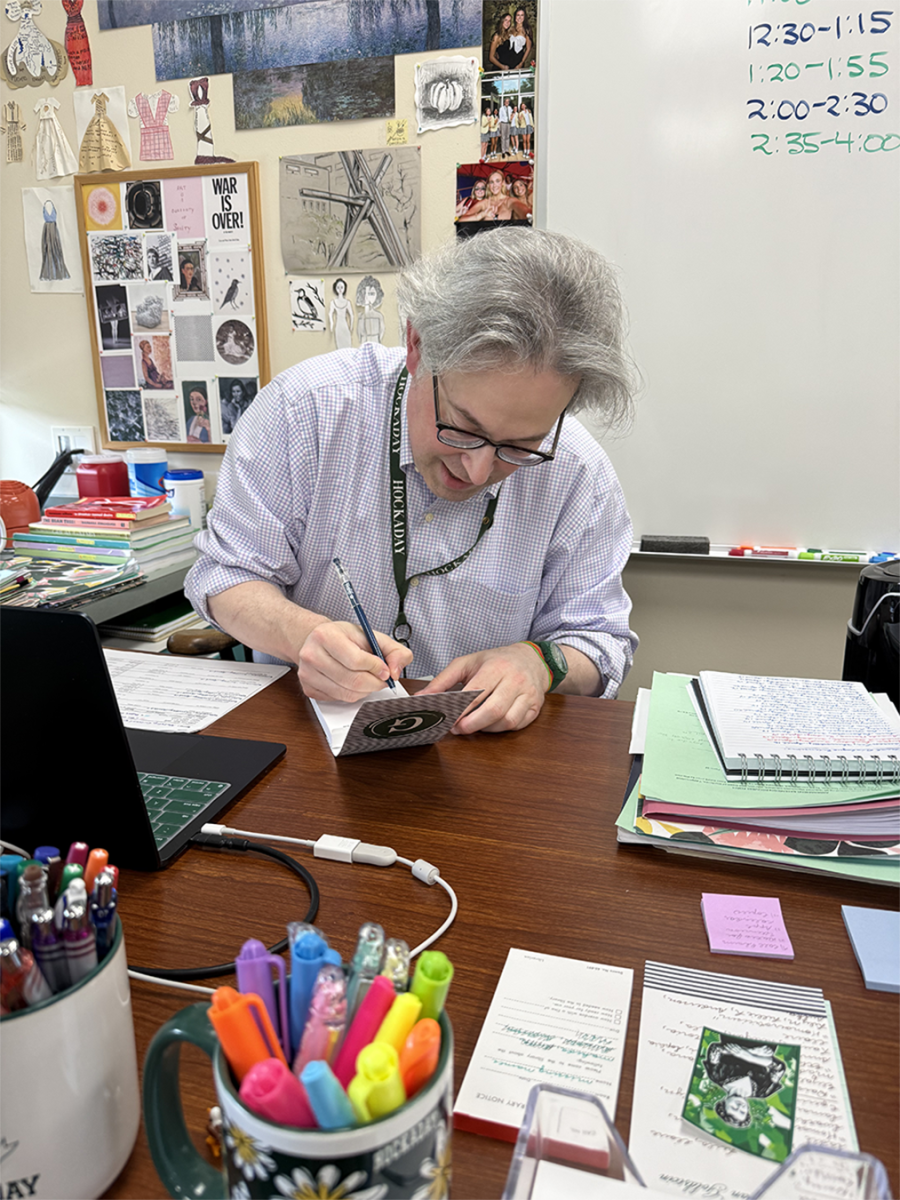










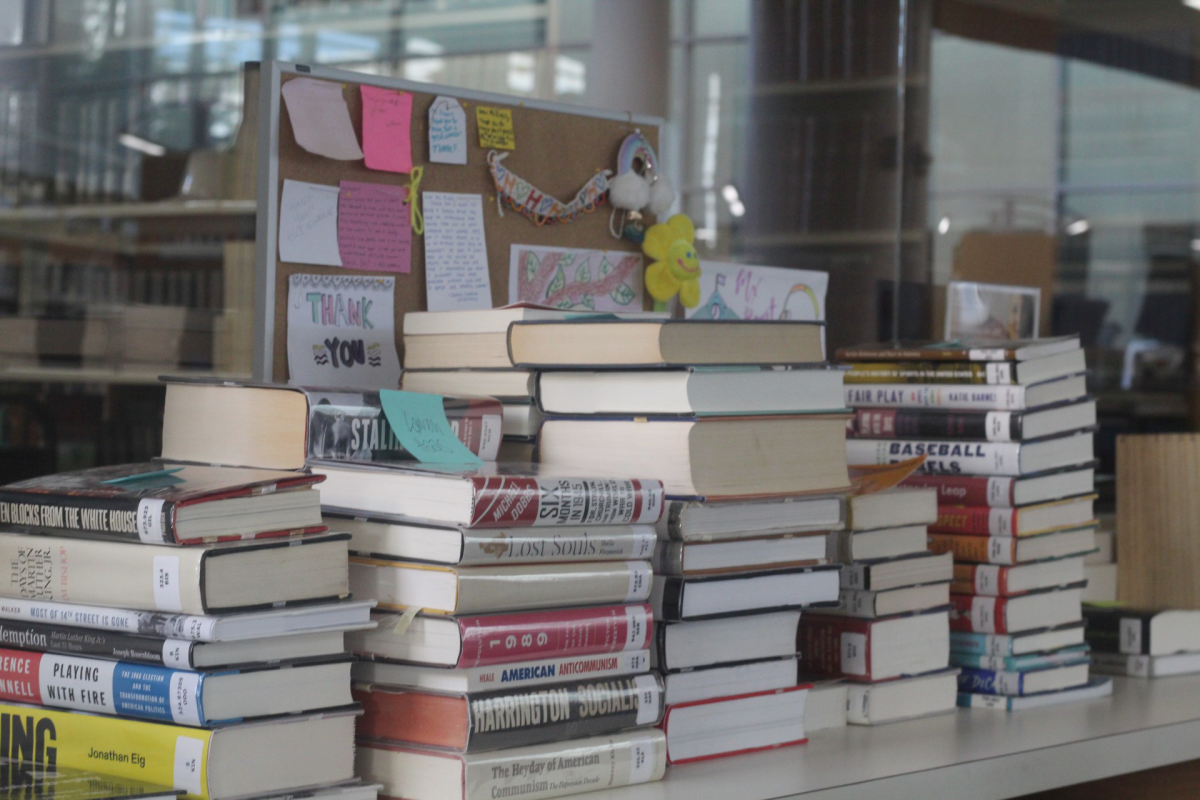
As fall begins, juniors begin writing their Junior Research Paper (JRP), battling through seemingly endless stacks of books and databases to find the perfect facts. With so much information available to them, the most valuable resource in their JRP isn’t actually a book or article; it’s the Hockaday librarians, who guide them through the complicated research process.
Arguably the most well-known project at Hockaday, the JRP is a 10-page research paper on any topic related to United States History. Past juniors have written about everything from Jello to sitcoms to Barbie. For many juniors, this is the largest paper they have ever written, and the process of finding enough information to fill ten pages seems daunting. So, how do they find all their facts and narrow down their topics? The Hockaday Upper School library certainly helps.
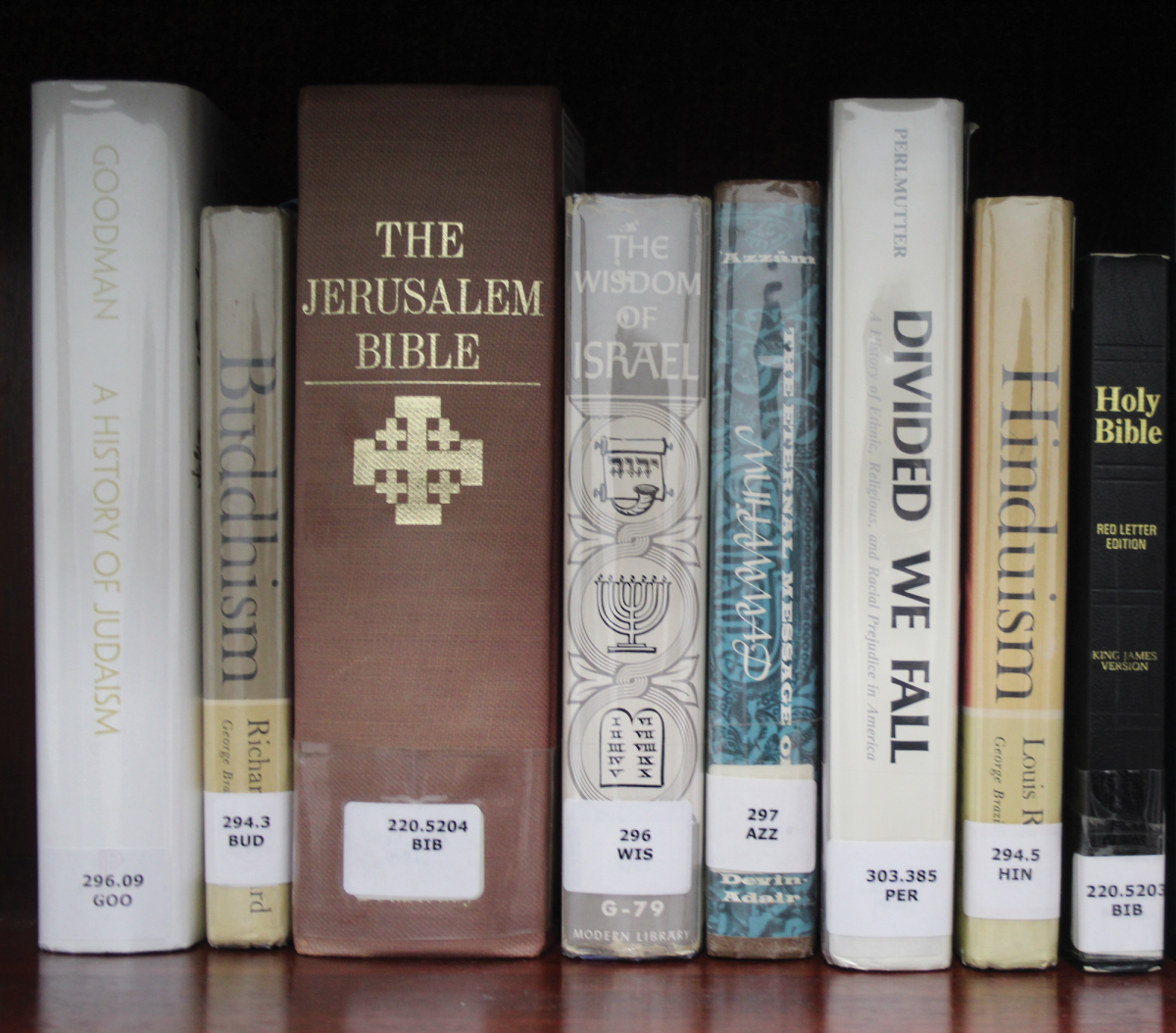
The library provides numerous resources, such as databases, the library catalog and more, to help juniors narrow down their topics and navigate databases and stacks of books, but the best resource of all is the librarians themselves.
“JRP season is my favorite time of the year, because I get to see a lot of the students that I maybe wouldn’t otherwise,” Library Assistant August Rivers said. “I get to learn a lot from the students and the topics that they choose, and it’s a really great way to build community.”
Juniors are encouraged to start by submitting the Book Request Form. Students define their general topic or just a few key ideas and the librarians find books based on their input.
“The book request form is helpful for students struggling to find books in the catalog related to their topic,” Director of Libraries and Academic Research Corey Lott said. “We pull some books for them and give them tips for further research on their own.”
To find books in the vast library catalog, Lott encourages students to break complex topics into components.
“A lot of times, there are a few components in a topic, so I break it down and look into the overarching theme of what it is and pull the books from that area,” Lott said. “If a topic is more niche, there’s not always one perfect book that might exist, so it’s just a matter of breaking it down into parts and finding the resources that are going to address that.”
When fulfilling book requests, Rivers also finds the process of breaking nuanced topics into components helpful.
“Sometimes I have to get creative when searching for some topics by searching for things more loosely related to them, because you can usually find more books that way,” Rivers said.
Lott said she often finds books that she didn’t even know the library contained during the JRP season.
“It’s like a treasure hunt every time,” Lott said. “I’ve been at Hockaday for 22 years, and sometimes when a topic comes in, I think the catalog doesn’t have anything, and then we do.”
Junior Haley McMahon said she found the book request form and database resources helpful. Her JRP examines how occupational work laws were influenced by radiation poisoning of the “Radium Girls” in the early 1900s.
“I filled out the form with different pieces of my topic and different aspects to look at it from, and I got around 10 books that were super helpful and fit everything I wanted to look at,” McMahon said. “I wanted to look at a variety of books with different authors, different subjects and different styles, which I think will help vary my research.”
Lott and Rivers can also help juniors narrow down topics from broad ideas to specific questions.
“We can help juniors figure out how to take all of their information and distill down their topic and form that into a research question or thesis,” Rivers said. “I ask them questions that they can shape and form their topic around. It’s like a brainstorming session, because at the end of the day, it’s going to be the student’s idea. We’re here as a sounding board.”
Rivers believes that the process of researching for the JRP is important to develop skills that are useful in college and beyond.
“I hope the students I meet with and walk through the process leave with a lot more research tools than they arrived with,” Rivers said. “Learning how to think critically and be curious with the research process is really helpful because it extends itself to critical thinking later in life.”
Lott agrees with this, hoping that students take away valuable skills and knowledge about research.
“I always hope the takeaway that students get from completing this process is confidence in their research skills and also a reminder that there are resources, like librarians, to help,” Lott said. “When they get to university, if they are researching something and run into a problem, I hope they remember that they can always reach out to the librarians.”