











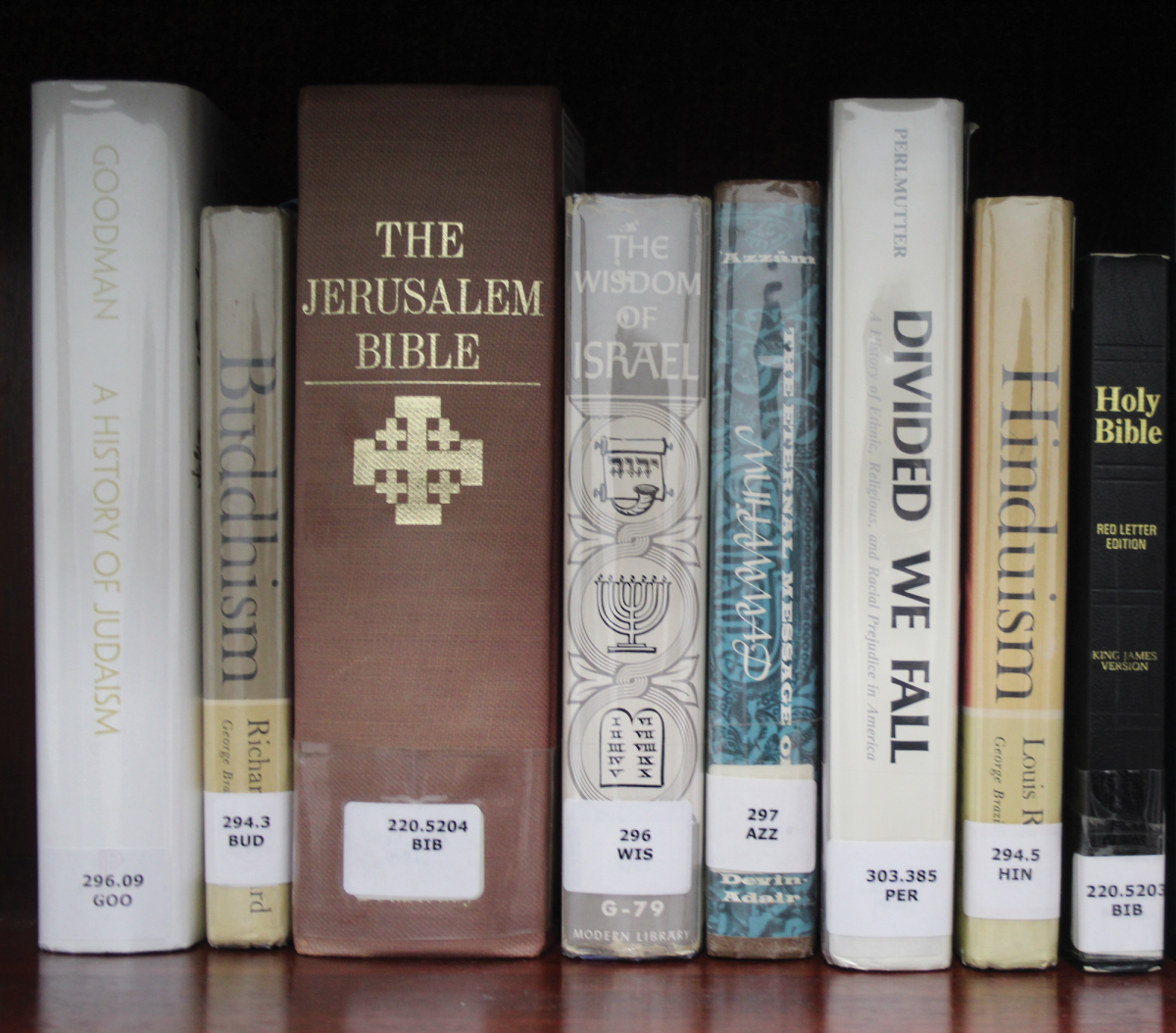










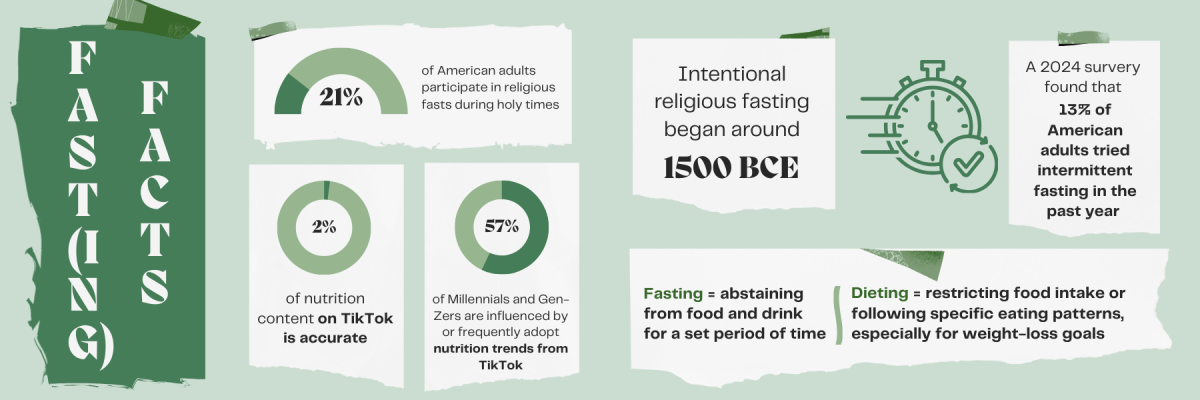



Long before fad diets and weight loss trends existed, religious communities engaged in fasts to encourage self-discipline, reflection and spiritual connection. Intentional religious fasting began around 1500 B.C.E., and today it is a widespread practice across faiths like Islam, Judaism, Buddhism, Christianity and Jainism. Around 21 percent of American adults participate in religious fasts during holy times, according to the Pew Research Center.
Sophomore Amel Taima fasts for Ramadan, a month of the Islamic calendar during which Muslims abstain from food and drink during daylight hours.
“Ramadan teaches you how to make healthy balanced meals for yourself that keep you full for a very long time,” Taima said. “When you’re not eating for 12-ish hours, you start to realize that you’re going to need these healthy meals to keep you full throughout the day.”
During Ramadan, Taima and her father wake up before dawn to eat a filling meal, trying to avoid carb-heavy food that only provides short-term energy. At sunset, they drink tea, eat dates and break their fast with a full dinner after praying.
“It can clear your mind when you’re not thinking about food that much,” Taima said.
She said fasting is difficult at the beginning of Ramadan, especially when it falls during her tennis season, but she appreciates the benefits once her body adjusts to the rhythm of fasting. Taima said that she feels calmer during Ramadan, and meal-planning for the fast helps her make informed choices about food consumption.
“It teaches me how to be more conscientious about what I put in my body and how to formulate healthy meals for myself,” Taima said.
The shared ritual of daily fasting connects her with others.
“It leads you to bond with a lot of people,” Taima said. “Everyone is brought together by [fasting], so it’s definitely a community thing.”
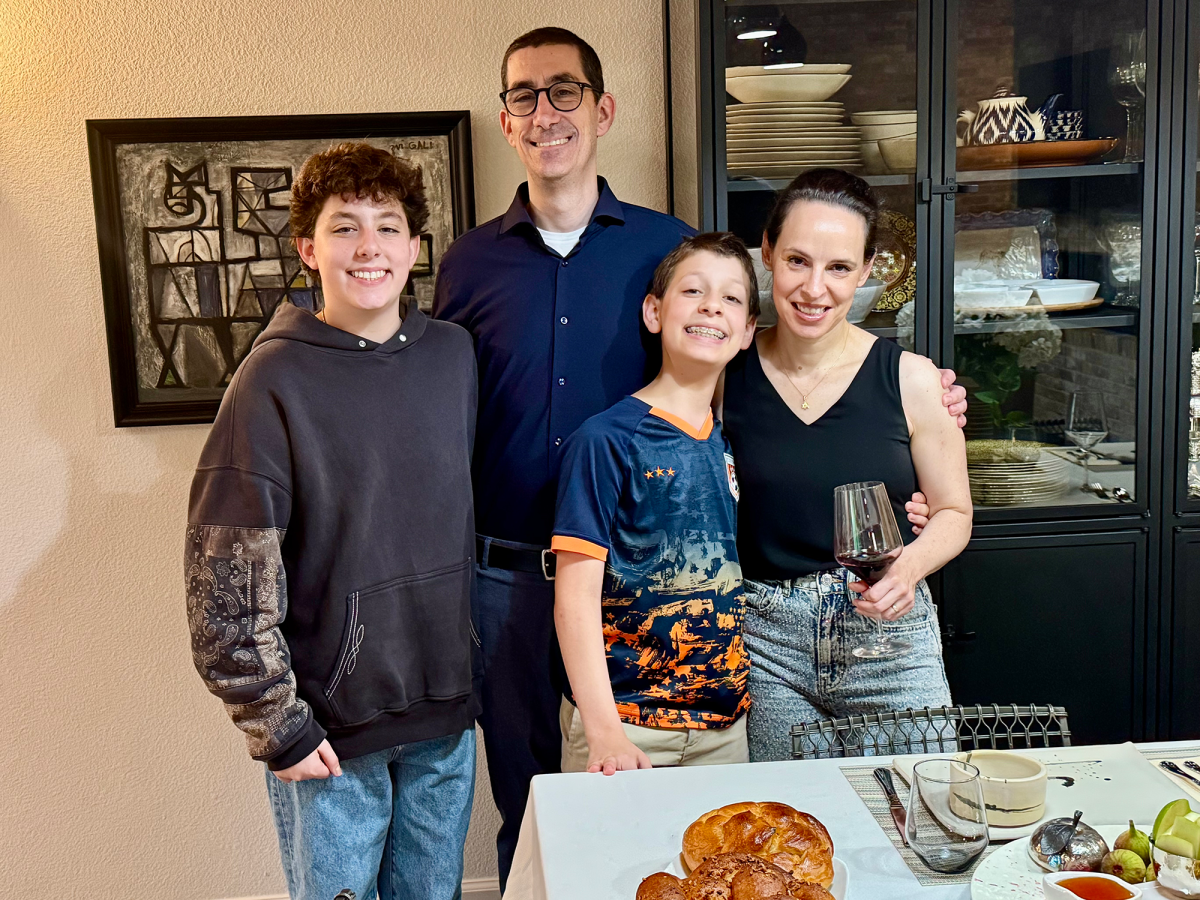
This sentiment is echoed by sophomore Caroline Fleiss, who fasts for Yom Kippur. The 25-hour “Day of Atonement” marks the holiest day on the Jewish calendar and designates a time of repentance for sins.
“I feel closer to my religion because everyone in the room [at Temple] is also fasting and feeling the connection to God,” Fleiss said. “It feels really good to be together as one on such a holy day of the year.”
Fasting is tiring for Fleiss, especially in addition to standing for long stretches of time during Yom Kippur services. Fleiss said she concentrates on the spiritual growth that the holiday facilitates.
“Although the services are long, they give me a chance to connect to God, and that’s really rewarding,” Fleiss said. “Sometimes it takes my mind away from food and water.”
Both Taima and Fleiss highlight the importance of proper hydration prior to fasting.
“I drink a lot of water the day before,” Fleiss said. “Yom Kippur has taught me that I really appreciate water.”
Far more people diet than participate in religious fasts: an estimated 45 million Americans go on a diet each year, and almost half of U.S. adults resolved to start a new diet in 2025. A major difference between religious fasting and modern diet trends is the intention behind them.
“I think that fasting is really meaningful,” Fleiss said. “It’s very different from modern day dieting and intermittent fasting because they have really separate purposes.”
A 2024 survey found that 13 percent of American adults tried intermittent fasting in the past year. Intermittent fasting is an eating plan that cycles between periods of eating and fasting, with time limits varying by the specific method.
Like Fleiss, Taima distinguishes dieting from religious fasting by their distinct goals.
“A lot of secular diets are focused on mainly losing weight,” Taima said. “The ones you see on social media that aren’t fact-checked by actual doctors might promote unhealthy forms of eating.”
Digital diet culture popularizes eating trends that often go viral despite the lack of research and medical evidence to back them up. According to a MyFitnessPal survey, only around two percent of nutrition content on TikTok is accurate, but 57 percent of Millennial and Gen-Z TikTok users reported being influenced by or frequently adopting nutrition trends from the platform.
“Fasting can be very helpful to your health, but you shouldn’t go into it with the focus of trying to improve how you look or the way your body looks,” Taima said. “Go into it with the focus of getting healthier and developing better healthy habits.”
Taima notes that physical appearance was never an aim of Ramadan, which she said is intended to simulate the experience of people without access to sustenance and increase empathy for those less fortunate.
“[Ramadan] helps me take new perspectives into account and understand how other people might feel,” Taima said.
Similarly, Fleiss said that Yom Kippur reminds her to be grateful for everything she has, from the necessities to the luxuries of life.
“The significance of fasting is so that you can appreciate everything,” Fleiss said.
No matter which religious fasts students observe, they feel a sense of victory afterwards.
“I feel very accomplished,” Taima said. “I can’t believe that I had the self-restraint and the composure to do this.”
Breaking her fast with her mom’s kugel (a traditional Jewish baked casserole) at the end of Yom Kippur, Fleiss feels the same way.
“It’s the best feeling ever,” Fleiss said.
Though the fast is challenging, she sees the value in it.
“Fasting on Yom Kippur relates to spirituality because I feel very connected and close to God,” Fleiss said.