





















Although queer love has always existed, it was not openly recognized on TV until the early 70s when the first openly gay character appeared in the show “An American Family.” Within the past decade, shows like “Heated Rivalry” transformed American television into a more diverse space by fostering a more inclusive mindset towards the queer community.
“Heated Rivalry” follows two hockey players in a gay relationship and is normalizing queer love. Gay characters historically played comedic or supporting roles without a main story of their own, so “Heated Rivalry” is significant in redefining queer representation in the media.
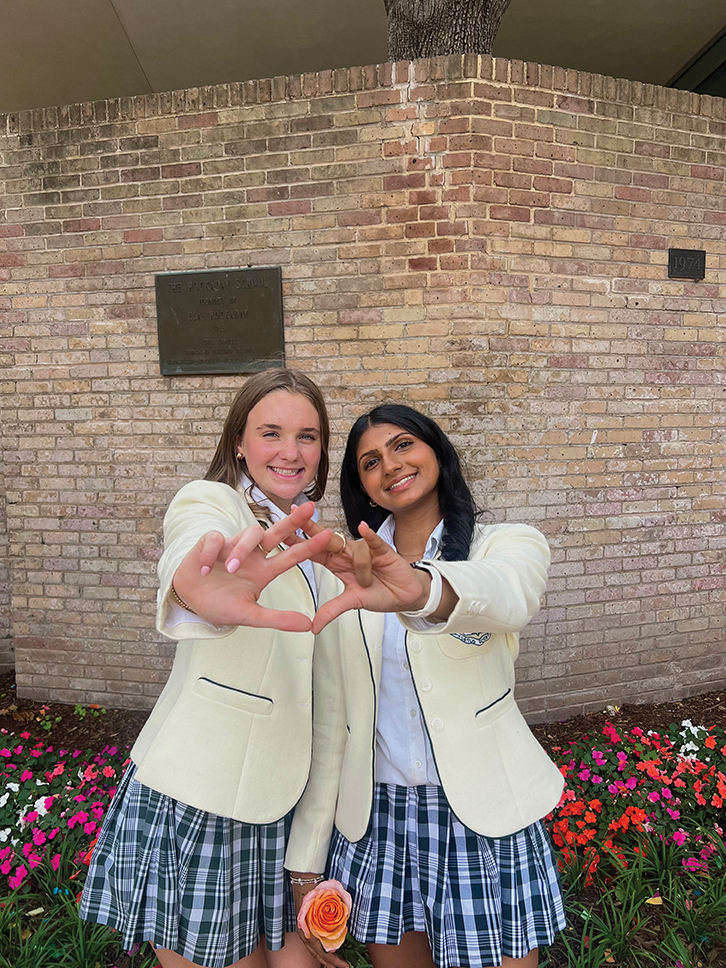
Junior Marley Randolph believes the rising popularity of queer television reflects the changes in societal attitudes and culture.
“With ‘Heated Rivalry,’ the whole point of the show is that they’re gay and their experiences around that, so I think it’s really powerful, and it’s really nice that we’re seeing a lot of shows that focus more on that rather than just being like, ‘ha ha, they’re gay,’” Randolph said. “It’s something that needs to be shown.”
The experiences of queer characters on TV also help members of the LGBTQ+ community, feel seen. In “Heated Rivalry,” Shane Hollander, a main character in a queer relationship, struggles to talk to his parents about his sexuality, and Randolph related to this struggle.

“I feel like I identified with him in that aspect of not knowing what your parents are going to think and those being your biggest supporters, and you just don’t want to let them down,” Randolph said.
The popularity of “Heated Rivalry” lifted stigma from sports across the globe, offering room for oppressed players to be open about their queerness. Destigmatizing queerness through television paves the way for inclusion.
Although accurate representation of different identities in television is hard to master, Randolph thinks it is still crucial to learning about other experiences. Despite the potential for skewed motives when watching LGBTQ+ television characters, the representation alone sets the stage for more open conversations.
Queer Student Union (QSU) President Pilar Hoitsma, a senior, believes that queer representation can sometimes be sexualized more than straight TV, even though the content of the media is roughly similar.
“When you think about ‘Bridgerton,’ you’re not like ‘that show is only about [explicit things],’ whereas with ‘Heated Rivalry,’ I think a lot of the reason that people become interested in it is because it’s a little bit more explicit,” Hoitsma said. “I just think it’s interesting that it’s somehow different.”
QSU Vice President senior Xeno Bennett encourages viewers, queer or straight, to look at media with an open-minded perspective.
“Seeing characters on a TV show and doing your best to understand them and process the struggles they’re going through makes you more open to doing that with someone in real life,” Bennett said. “It makes it so that queerness and everything that comes with it is not so foreign to people.”