
















No matter the shape of the table, the plates or the portions, meals connect people. Food is a direct product of ancestry, bridging families to their cultural roots. Whether dinner is made special for a holiday or prepped for just another day of the week, it holds meaning.
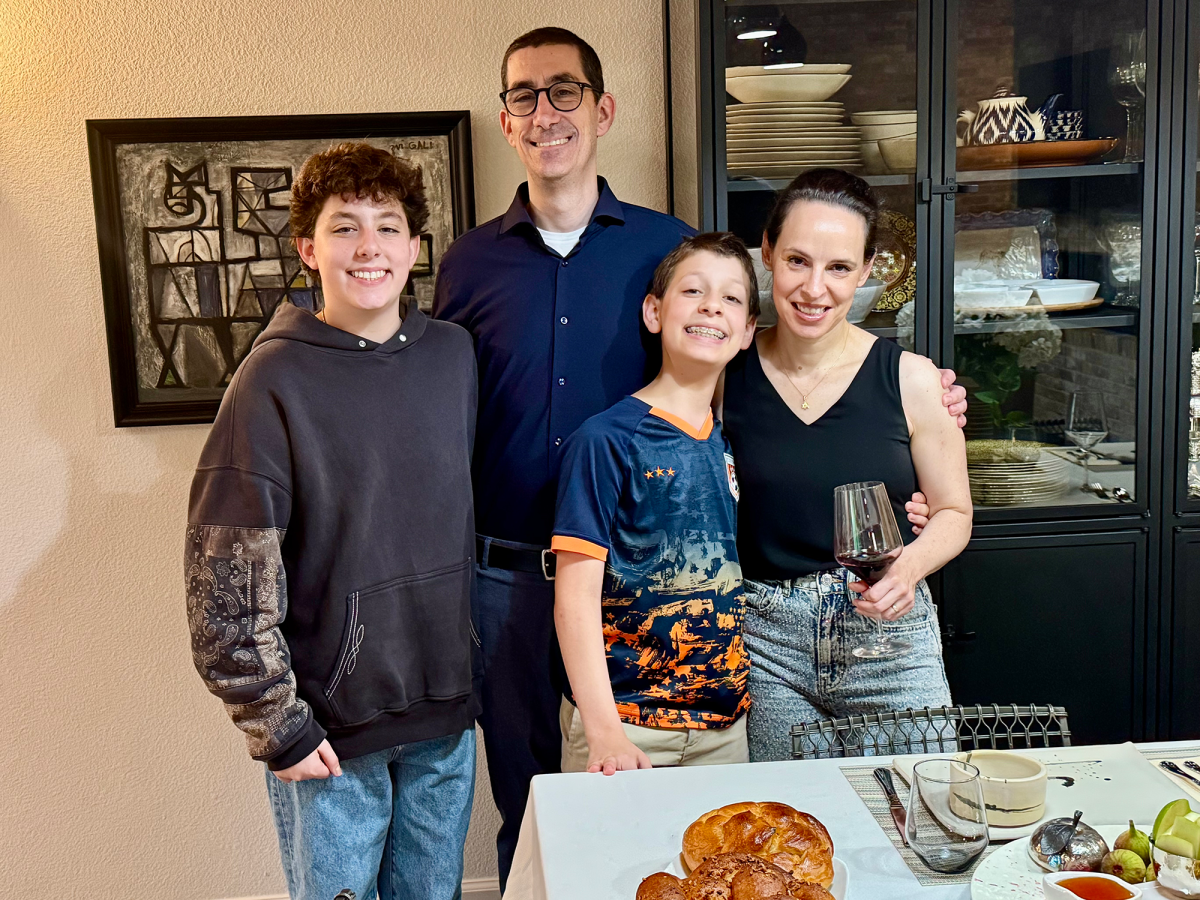
Dr. Shulamit Moed sees dinner as the main time of day to catch up with her family. Her family makes an effort to have dinner together because her kids have busy schedules and activities after school.
“It’s the wrapping of the day for us, because after is the time to shower, study or relax,” Moed said. “Food is family, but it’s [also] life.”
For the Moeds, the kitchen is a space of joy. Her family’s ancestry is Eastern European Ashkenazi Jewish and cultural food is a staple of every holiday. She cooks their meals mostly by herself with tedious precision and care. She accounts for every nutritious building block, ensuring every food group is accounted for.
“It’s kind of like an art,” Moed said.
In her family, sometimes everybody eats something different. However, she does not mind, believing that being together is the actual connection.
“We eat together 95 percent of the time.” Moed said.
Her sixteen year old son, Shalev, loves his mother’s cooking.
“I love the matzah cake she makes,” Shalev said. “I eat the whole thing. Food is such an important part of my life, and her love just elevates it.”
Sophomore Ellison Gonzalez comes from a large family where food is also a sign of love. She typically eats with her two younger sisters and parents every day of the week.
“We’re all usually very busy, so I like it when we sit down and eat together,” Gonzalez said. “We talk about each other’s days.”
Her parents’ nationalities play major roles in her food at home. Her dad is from Mexico, and her mom was born in America. For Thanksgiving and Christmas, her family alternates between visiting her mom and dad’s side of the family.
“We get the best of both worlds.” Gonzalez said. “Some years, when we travel to Mexico, we have a lot of Hispanic food. When we stay in America, we get a lot of what you would expect. Food is something that can unify people.”
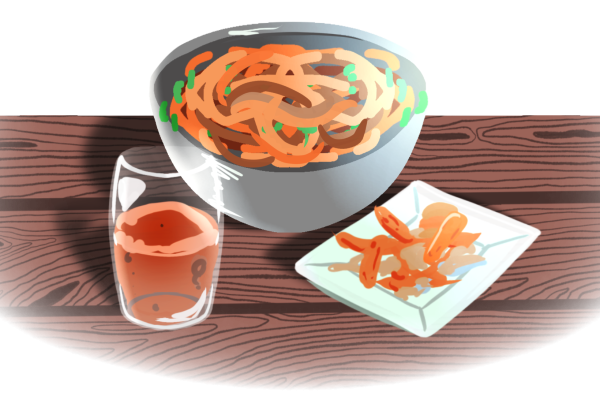
Sophomore Katya Davis finds herself culturally connected to food. Her stepdad is Turkish, and her mom is Belarusian, giving her family dinners variety. She loves the fermented carrots her mother buys at the Russian store. The carrots are paired with radishes and ginger and served as a side for dinner. She also likes kvas, a fermented rye bread drink that tastes similar to soda.
“I don’t get to see my stepfather a lot, but when he cooks Turkish food, it gives my family something to talk about and bond over,” Davis said.
Most of all, she likes the borscht her babushka makes.
“Whenever I eat my babushka’s cooking, I think of her house in Belarus, and I can almost smell the place.”
She recalls being in her home in Gomel, sitting at her kitchen table, stuffing the pelmeni while her babushka cuts the dough. Every time the dish is made for dinner, she thinks back to those memories. The smell of those foods reminds her of her Babushka when she’s away.
Another sophomore, Olivia Pearson, helped run the Filipino booth at the International Festival in November. In the Philippines, the nation takes pride in its cooking. Their festival booth featured lumpia, a kind of egg roll. Additionally, they had bibingka, coconut mochi rice pastries.
Of all Filipino food, Pearson finds herself drawn to one in particular.
“I love pancit because I’ve always been a fan of noodles. I love it also because you can have chicken pancit, lemon and lime pancit and so many different kinds.” Pearson said.
Senora April Burns, an avid traveler and Upper School Spanish teacher, finds similar connections to food. She believes that family dinners have nurtured her personal relationships her whole life. She grew up in a Southern home with a mom from the North, bringing different sides of America to the table. In her 20s, she moved to Mexico, which further expanded her palette.
“I had a taco stand that I called the Yummy Yummy Taco Stand that I would walk to often. Not far from my apartment, there was a fruteria, which had a beautiful thing called a bionico, freshly cut fruit with crema and granola.” Burns said.
Now, she lives in Dallas with her husband, who brings food from his own background to their dinner table.
“My husband is half white and half black, so we eat a lot of soul food. He loves to cook because it’s a way for him to show his love for me,” Burns said.
Regardless of the kind of food, dinner is a meaningful part of daily life for tons of families; it is a connection between culture and people. Whether the meal is ordered in or made from scratch, the unity it brings is the essence of family.
“Food gives me comfort, and it gives me energy,” Moed said. “Really well-cooked food can just make your day.”