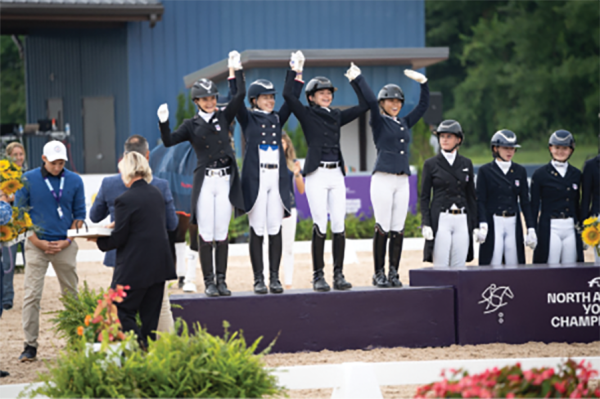













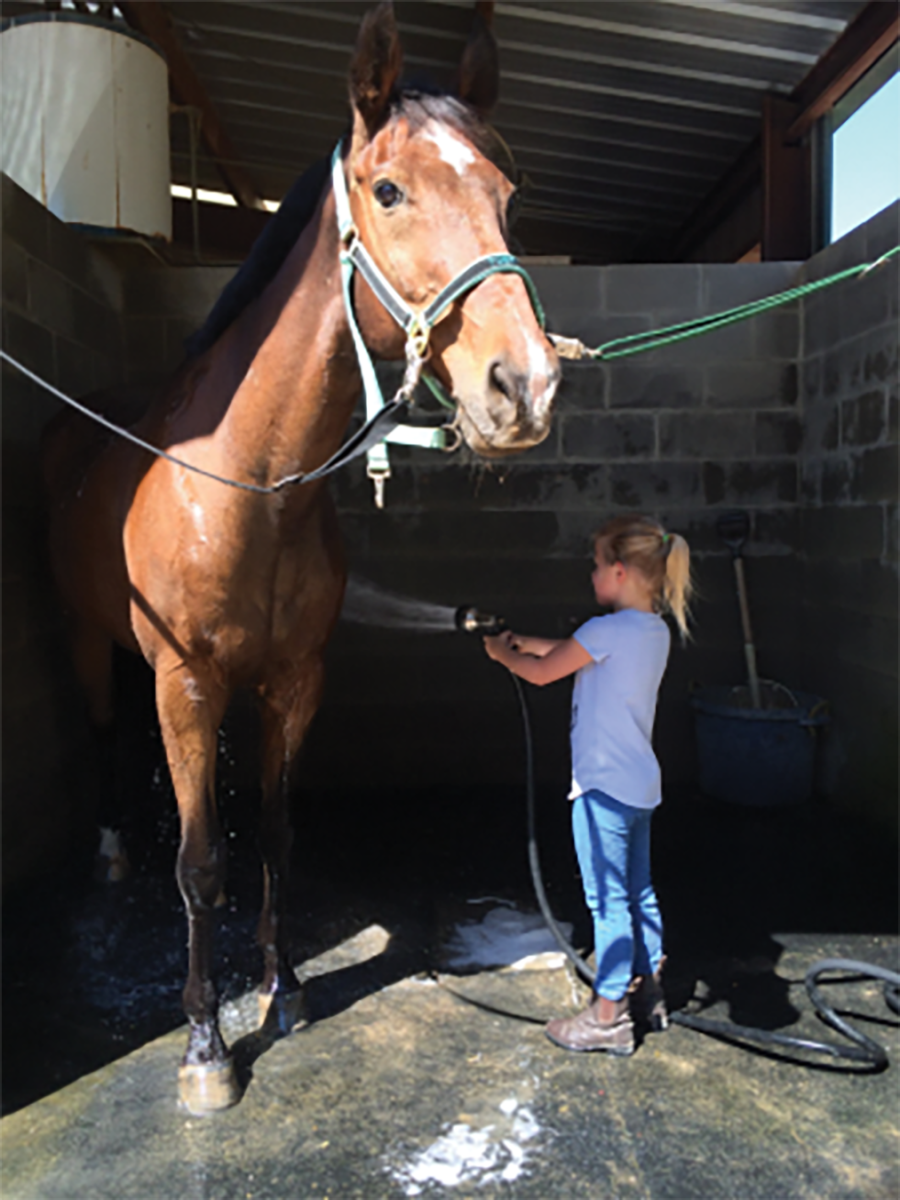





Preparing for her second time competing at a national championship, 12-year-old MK Connatser walks, grooms and braids the manes of her horses, Donny and Blitz, before the Festival of Champions competition.
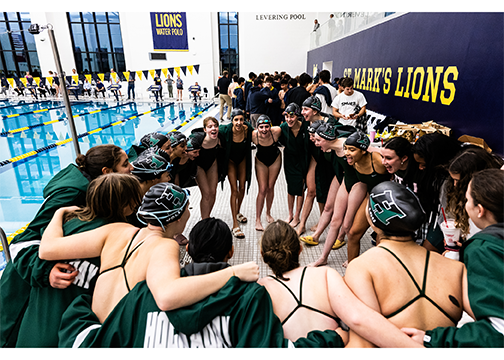
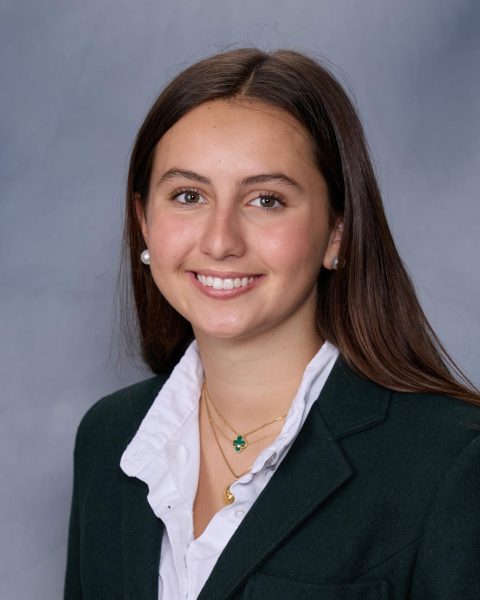
Now a sophomore, it is clear that horseback riding has played an incredibly large role in Connatsers life. Her mother grew up horseback riding, which is why Connatser specializes in riding and not jumping, as her mother wanted to keep her on the ground. Riding is the skill of controlling a horse at a walk or canter while jumping is a riding discipline requiring specific techniques to navigate obstacles.
“I started when I was three in a little barn called Dallas Equestrian Center,” Connatser said. “But then my trainer moved, so I moved to a different barn called Rocking M Stables. Since I was four, I have had the same trainer.”
From a young age, Connatser knew that she wanted to compete at the highest level possible. Now, she is nationally ranked, according to results from competitions such as the 2025 North American Youth Championships and Festival of Champions.
Although a lot of this journey has come naturally and been extremely rewarding, it has also had its challenges.
“I think it’s such a different sport because you can’t just talk to the horses who also have a mind of their own,” Connatser said. “It can be really challenging. It’s not like you are working with people who speak your same language. You’re not even working with a person at all, and if they don’t want to do something, they are not going to.”
To overcome this challenge, Connatser has had to learn how to work with horses, understand them and most importantly, build a strong foundation of trust.
“They don’t all work the same,” Connatser said. “Today this works, tomorrow it may not, so there is a lot of trial and error, a lot of patience and with every single horse you have to be able to bond with them completely because they need to trust you because they’re prey animals So, you could look outside and hear a loud car and to us it’s not scary, but to them it’s terrifying.”
Before each competition, Connatser mentally prepares for what is ahead.
“I have a mental coach,” Connatser said. “It’s a lot of pressure because it’s not necessarily a completely individual sport as you are working with an animal, but it is individual in the sense that I’m the only person on my team. It really is just making sure that I am physically prepared and have done preparations in the weeks and months leading up to the competition. Also, on these days, I have my routine and am able to time out everything carefully so that I am not in a rush to get ready.”
Connatser’s typical day of training is very complex as she manages her time at school with time to practice.
“I go up to the barn in the mornings before school, usually waking up around 5:15 a.m.,” Connatser said. “My mom is super helpful and goes up with me. She gives both my horses their supplements and deals with maintenance. I am able to get my horse ready in about 15 minutes, groom and tack him up. Then, I ride for about 30 to 45 minutes in our arena. My warmup usually takes 15 minutes, and then I get into more intense work with him, depending on the week or the level that we are working on.”
Connatser’s goals for her future in horseback riding are not solely centered around winning awards or competitions, but mainly revolve around always having horses in her life.
“I would love to be able to compete in the World Cup, which I have to wait to be 18 for, but after that I would just like to have horses in my life, at least through college,” Connatser said. “I don’t know what that will look like, but I wouldn’t necessarily say I have one materialistic goal, such as getting this score or placing. I would just like to have horses in my life and continue to compete for as long as I see possible.”
Connatser said she contributes to expenses associated with the sport by paying for a percentage of their original cost.
“I’m very fortunate that my mom works as hard as she does, and also grew up in this sport, so she knows what it takes, the time commitment and the cost,” Connatser said. “She very much is like, if you look at a horse that you want, and that’s not possible, then I’m going to tell you. But we also have a deal that whatever horse I buy, I pay for 20 percent of their original cost and pay out of [my] pocket.”
For future riders, Connatser said it’s important not to compare yourself to others.
“It’s a very individualized sport, and lending yourself to comparison is just going to set you up for failure,” Connatser said. “Everybody’s journey is different.”