


































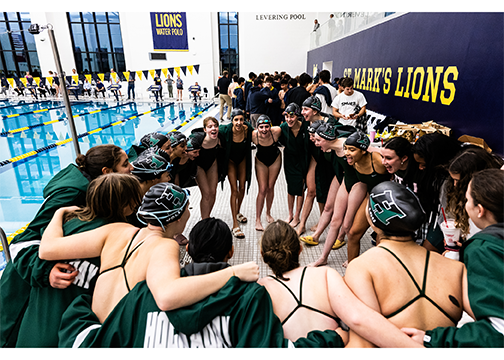
As the school year comes to an end, the Upper School Athletic Department is implementing significant changes to the structure and future of the department. From P.E. exemptions to captain voting, administrators say this restructuring will lead to a smoother athletic experience for all students.
As part of these changes, beginning next year, Upper School students will need fewer PE credits to graduate, but will no longer have the option for exemptions based on outside activities. Students will earn PE credits for Hockaday athletics, dance and physical education classes only.
Current exemptions were granted to students who participate in at least 10 hours of outside-of-school sports. These include club swimming, outside dance and horseback riding among others.
Director of Athletics Melissa Coyne said the current policy is tedious and inconsistent.
“The process of tracking, verifying and managing these exemptions is a heavy administrative burden,” Coyne said. “Ultimately, creating a consistent student experience is the goal. Changing the narrative from ‘this is what I have to do to get out of P.E.’ to ‘this is what I have to complete in order to graduate with the appropriate credit for PE’ is the other goal.”
Coyne said an independent assessment of the program supports the change.
“The recommendation was made to eliminate P.E. exemptions,” Coyne said. “The exemptions often create an uneven student experience.”
Coyne also clarified that although the administrative burden is heavy, it is not a primary reason for the change.
“The leading drivers are the change in graduation requirements for PE (making the exemption unnecessary) and creating a more even student experience.” Coyne said. “Athletics is a cornerstone at Hockaday and PE is a part of athletics.”
With the elimination of P.E. exemptions, the graduation requirements for P.E. were reduced by two credits, which provides more student flexibility in scheduling.
“Given the new graduation requirements for PE, it also felt unnecessary to continue to allow exemptions,” Coyne said.
Coyne considers this change a positive for club athletes.
“Students who participate in outside activities should be thrilled with this new policy,” Coyne said. “They will be able to schedule P.E. around their club seasons. For example, a student who plays club volleyball in the spring can choose not to take P.E. during that trimester and schedule it when they have more bandwidth in their schedule overall. Exceptions would be granted in very, very rare circumstances.”
Sophomore Zara Patel’s experience this year illustrates inconsistency in the exemption program. Despite practicing 18 hours a week for the Dallas Rowing Club, Patel was denied a P.E. exemption for the winter season this year.
“I guess it was just based off of the Hockaday schedule” Patel said. “My club practices year-round and we compete year-round.”

Coyne said that common reasons athletes were denied exemptions were that private training and small group lessons did not count as practice hours with the team, or that dates of competition fall outside the current trimester and therefore can’t be considered for the exemption. She agreed that this system creates massive inconsistencies, which is another reason why the Athletic department has decided to discontinue exemptions for outside activities that they cannot control.
Patel said not receiving a free period increased her stress as she arrives home after practice at 8:30 p.m. and works on homework each night until 12:30 a.m.
She also believes taking P.E. at school has affected her club sport performance.
“Sometimes, we would have lifts [during PE], and then I would have to do a test piece, like a 2k that day,” Patel said. “That sometimes made me sore.”
In another change, team captain selection will take place at the beginning of each season instead of the end of the previous season. Coyne said the change was based on shifting team composition from year to year.
“Team composition is new from season to season,” Coyne said. “Sometimes, a roster can have 50-60 percent new players, who, in the current policy, would have no say in the leadership of their team. I believe the current team should select the leadership.”
Some students disagree, arguing that the change disadvantages incoming freshmen while removing outgoing seniors from decisions about teams they have spent years with.
“When you have voting at the end of the season, then you see people’s track records of how they lead a team throughout all the seasons that they’ve been on the team,” senior and varsity swim captain Sophia Lou said. “For new freshmen, with the new policy, they’re really at a disadvantage because they only have [captains’] speeches to go off of to know how a person would lead as captain.”
Coyne said younger athletes are more capable than they are often given credit for.
“They were talented and capable enough to make the team, which says to me that they should be included in decision making,” Coyne said, adding that players moving up from junior varsity face similar situations.
Athletic Board chair senior Sena Asom raised concerns about how the change affects preseason planning and team traditions.

“It’s just not optimal for sports to plan stuff at the beginning of their season,” Asom said. “For example, I know cross country does the retreat, so you don’t have captains to help plan preseason. Senior influence helps because you’re passing the torch on.”
Coyne acknowledged that the lack of captains and clear leadership during offseason could be difficult but framed it as a chance for broader leadership.
“The obvious challenge with this change is how to manage off season or pre-season workouts/activities when no captains exist yet,” Coyne said. “I believe this change will have a very positive impact on team culture as it will promote inclusivity across the entire team. Everyone has a say in leadership. No one is left out.