

























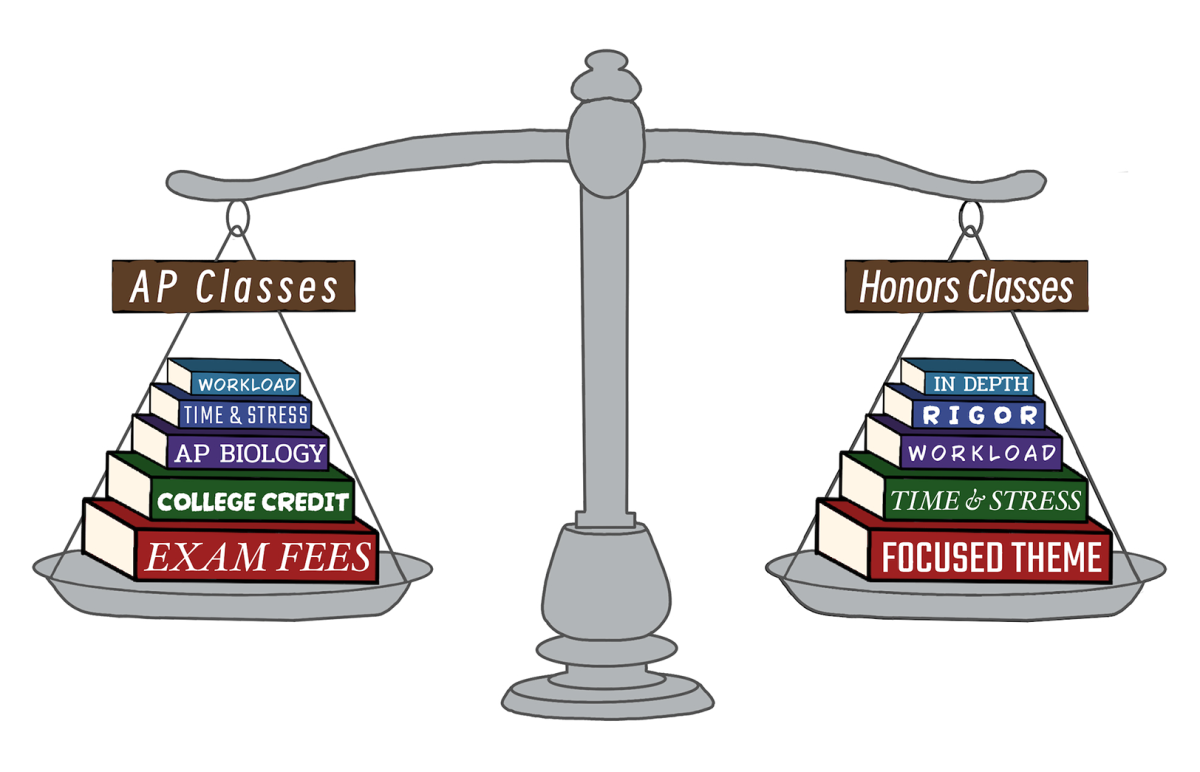












When course selections for next year began, debate sparked among my peers over how to fulfill the U.S. history requirement. While some registered for the Advanced Placement (AP) course in hopes of earning college credit, others chose one of the three Honors seminars, either because they were less interested in pursuing an AP history course or because they preferred a more in-depth approach to U.S. history through focused themes.
This divide reflects differences in students’ priorities and approaches to course selection. While AP classes can be worthwhile for students whose goals align with earning college credit, balance and meaningful learning should remain the priority.
For some, AP courses offer structure and breadth that can be appealing. However, factors such as credit transfer policies, course weighting and the difference between depth and range all play a role in determining whether AP or Honors is the better choice for a particular student.
According to the 2026-2027 course catalog, Honors classes are “taught at or above the AP level and are designed by Hockaday faculty members.” While they provide comparable rigor within a more focused subject area, AP classes follow a standardized national curriculum with exams administered by the College Board each May. Because both options are academically challenging, students are often left weighing other factors when making their decision.
College credit is one of the main reasons students choose AP courses, but whether that credit is awarded depends on the college. Some schools grant credit for high AP scores, while others do not. Policies vary by institution and subject. At some colleges, a score of 4 or 5 is required to earn credit, while others do not grant credit for certain exams at all. Because of this variation, it’s important for students to research individual college policies before assuming AP scores will transfer.
Additionally, all courses at Hockaday are weighted equally, meaning neither AP nor Honors classes provide a GPA advantage.
Another factor influencing student choices is interest in the subject. For those who enjoy a faster-paced, broad overview of a topic, AP courses can be rewarding. However, instead of filling schedules with multiple AP classes, students may benefit more from selecting courses that align with their interests and learning styles. For example, Honors seminars may appeal to students who prefer to engage in a single theme in greater depth rather than covering a wide range of material.
When deciding between AP and Honors courses, students should consider whether the class supports both their academic goals and personal interests. While AP courses can offer potential college credit and a broad academic foundation, Honors seminars provide space for deeper exploration and discussion. Shifting the focus away from the pressure of the AP label and towards intentional learning choices can lead to a more meaningful academic experience. In the long run, a balanced course load matters more than the number of AP courses on a transcript.