





























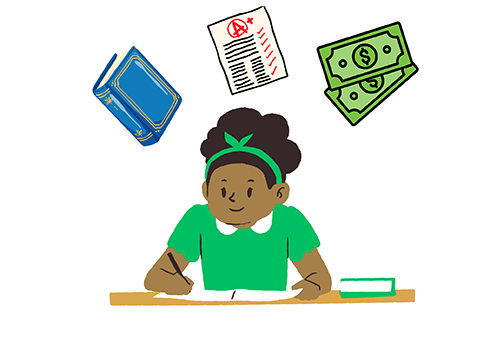
At Hockaday, academic excellence is oftentimes an expectation and a point of pride. However, this pressure comes with a large price tag, as private tutoring and standardized test preparation are becoming increasingly normalized parts of our academic experience. Both families and students often feel pressured to invest financially to keep themselves competitive academically.
The pressure to seek additional help is an experience many students choose to keep hidden or secret. Though tutoring is a widely used resource, especially in difficult, high-level classes, students may avoid mentioning tutors out of fear of judgment from faculty and peers.
This secrecy reinforces a misleading narrative that turns into a vicious cycle. When students feel compelled to hide tutoring, academic success can appear more natural than it actually is, creating unrealistic standards to which peers measure themselves. The result is an environment where students compare outcomes without acknowledging the extra resources that their classmates may have had.
To be clear, I believe that tutoring can be an extremely helpful tool, especially when you are struggling in a challenging class. Individualized attention, targeted test strategies and repeated practice can dramatically improve understanding of material. However, we also need to recognize that for many students, tutoring is the result of an internalized pressure brought about by Hockaday’s academic culture.
The financial aspect also intensifies this stress. Private tutoring can cost hundreds of dollars per hour, and SAT or ACT prep courses can total thousands. Students who can afford these resources gain academic reinforcement and support from topic experts. Those who cannot are left navigating the same high expectations without comparable support. The dynamic between access to tutoring distorts the true meaning of academic excellence, further adding to the narrative that grades aren’t a true representation of ability.
Even students who use tutors may feel conflicted. There might be guilt with the financial cost or anxiety over whether outside help diminishes the legitimacy of their achievements. Tutoring has become a resource but also a source of shame, further complicating students’ relationships with learning.
Hockaday provides internal academic support through teachers, office hours, the Writing Center and learning specialists, but private tutoring offers advantages that simply cannot be replicated at a school. It offers sustained, on-demand and individualized attention that molds to a student’s stage in the learning process.
This culture mirrors a broader national trend often described as the “shadow education system,” in which private academic services operate alongside formal schooling. As college admissions grow more competitive, and students worry that one bad grade can tank chances of acceptance, families increasingly feel that tutoring is no longer an optional, supplementary resource.
The problem is not that tutoring exists or that it can be helpful. The problem is that academic success is increasingly tied to financial access. This further deflates the meaning of grades as honest measures of understanding, devaluing the concept of a “high GPA,” signaling anything about a student’s potential.
As a community, we should work towards normalizing academic support rather than stigmatizing it. Tutoring should not be seen as evidence of weakness or failure, but as one of the many tools a student can use to succeed. At the same time, we must recognize the disparities in access to this resource. It should prompt broader conversations about equity, expectations and what we truly value in terms of academic achievement.