






























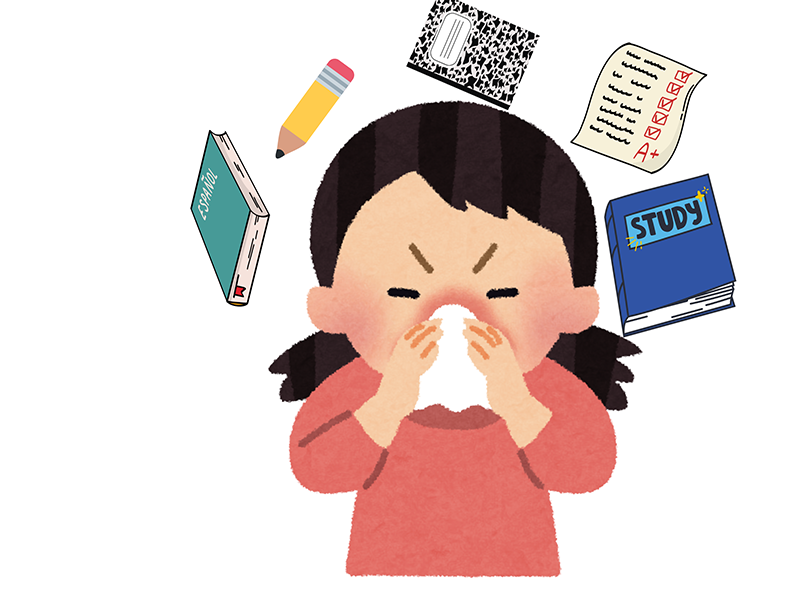
As fall sets in, another season arrives with pumpkin spice lattes and cozy sweatpants: flu season. Here, the cooler months inevitably bring waves of coughs, sneezes and mountains of empty tissue boxes piling up in classrooms. But every year, one question persists: should students come to school when they’re sick, or is it better to stay home?
For many of us, the answer isn’t as simple as doing what’s best for our recovery and our peers’ health. Missing a day (or sometimes several) can feel catastrophic in our rigorous environment. With tests, quizzes, presentations and homework piling up daily, an absence leads to a mountain of catch-up work that enhances stress and results in a prolonged recovery.
That fear of falling behind pressures us to push through illness and show up to class anyway. It has become very common to see students coughing through an assembly or sneezing repeatedly during a test. And while the dedication to academics is both admirable and relatable, it raises a bigger concern: the health of the community.
Attending school while sick doesn’t just impact that student; it also risks spreading illness to healthy peers and teachers. According to the Centers for Disease Control and Prevention (CDC), the flu virus can spread up to six feet away through coughs, sneezes and even simple conversation. In a school environment where students are physically close to each other for hours every day, germs move quickly. One student’s mild sore throat might become another’s full-blown fever.
So, what’s the solution? Ideally, sick students should stay home, especially if they have a fever, persistent cough or other flu-like symptoms. Rest not only speeds up recovery but also protects peers from unnecessary exposure.
Once they recover, students should talk to teachers to develop a reasonable plan for missed work. Our teachers are empathetic and more than willing to work with students in unavoidable circumstances.
Still, for students who feel they can’t miss class, there are steps that minimize their risk to others. For example, wearing a mask drastically reduces the spread of respiratory droplets. Additionally, practicing social distancing is a vital measure. Sitting at the edge of the classroom, skipping crowded lunch tables and avoiding close physical contact help reduce the spread of germs.
Frequent handwashing or hand sanitizer usage are easier protective measures. While not perfect substitutes for staying home, these habits reduce the risk posed to other students.
Ultimately, the decision to attend school sick is more than a personal calculation about falling behind. It’s also about responsibility to the people around you. One student’s choice to power through illness might mean someone else misses an important game, performance or family event because they caught the flu. In a school where our cornerstones value courtesy and character just as much as scholarship, choosing to prioritize health (your own and others’) is not a sign of weakness.