

















Everyone knows that feeling of zoning in to write an English essay, an entry for Vibrato or a history paper. Writing in all shapes and forms is an inherent part of the Hockaday student’s everyday life.
But students aren’t the only members of the Hockaday community who write. Many teachers at Hockaday are writers as well.
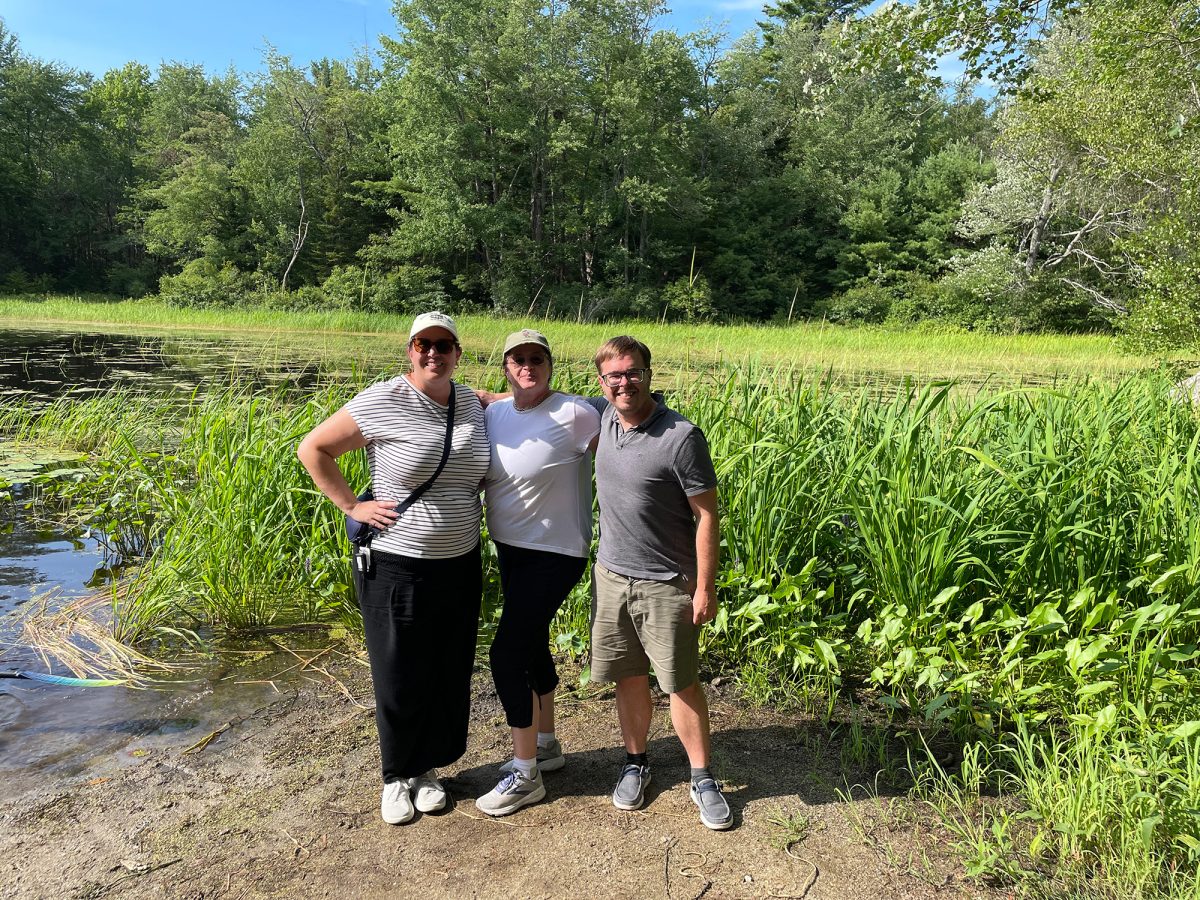
Realizing that most established retreats focus on classes and learning how to write, Hockaday teacher–authors and their friends decided to organize their own yearly writing retreat to Boothbay, in Maine—the ideal spot for a getaway: beautiful scenery, little distraction, and most importantly, far, far away from the worries of everyday life. Each day, the writers would spend the day working on their projects and then come together to share and give feedback.
“When I go away to Boothbay, I have none of the normal obligations and there’s nothing calling my name,” Dr. Jennifer Boulanger, Upper School English teacher, said. “All I have to do is write, and that is so freeing, to just have a whole day with nothing scheduled to just think.”
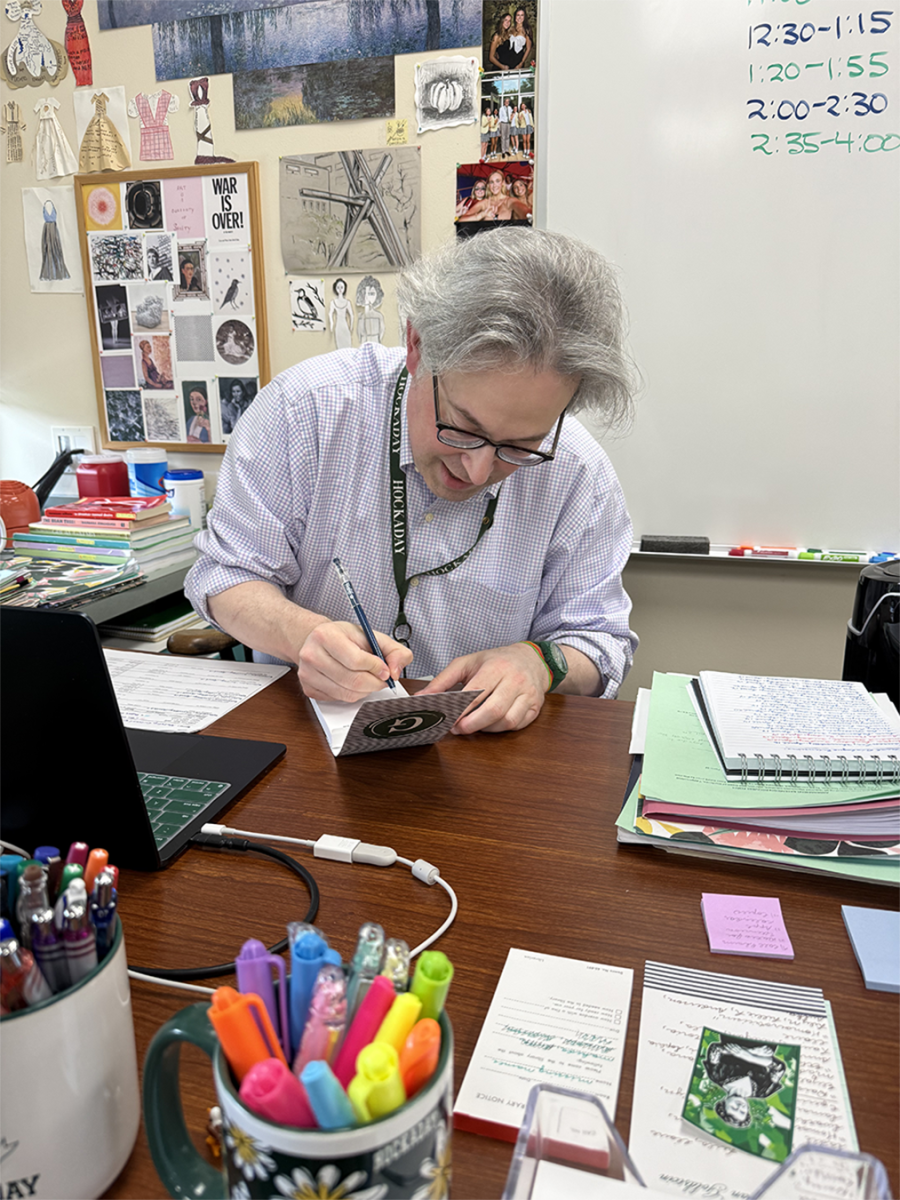
Boulanger has joined Upper School History teacher Wesley Lummus and others at this writer’s retreat for the last two years.
Boulanger is working on a novel, which she started during the COVID-19 pandemic, and is now five chapters away from finishing the first draft. It is a retelling of an early King Arthur legend originally written in French during the 12th century, specifically focused on Guinevere and Lancelot.
“I love [the legend], and I decided I really wanted to know what’s going on in their heads, you know?” Boulanger said. “What were their motivations? Their feelings? If you want to know, create it, right?”
The retreat provides a change of scenery as well, which also helped Boulanger write the novel.
“My book is set in Cornwall, England, and the landscape is just like the Boothbay landscape,” Boulanger said. “I thought, I can look at those cliffs, and I can put them in my book.”
Lummus said that the retreat has helped his writing as well.
“It helps that everyone is doing the same thing, so you have a common community,” Lummus said.
Lummus is working on a novel about an Iranian American’s interactions with political situations and controversies surrounding him, which is in its revision stage at 350 pages. He first became interested in writing fiction through writing about history and went on the retreat in its first year.
This year, the group has decided to develop the retreat into an official writers’ retreat for more authors to participate in, directed by Boulanger. The logistics are still being worked out, but Boulanger is hopeful that Maine local authors will come as well.
“My goal is to get Stephen King to come,” she said.
Outside of the annual retreat, Boulanger, Lummus and other friends continue to support each other’s writing journeys throughout the year. Their writing group, The Inklings, meets every Wednesday, sometimes writing together, sometimes taking turns reading their writing to each other for feedback.
Lummus said that the Inklings have helped him tremendously as a writer by creating a sense of community for him.
“It helps to know that other people have the same goals as I do,” Lummus said. “To be honest, it makes me feel less silly, because other people have this ambition [to write fiction] too.”
Boulanger agrees that writing with others has been beneficial to her writing, as she can receive honest criticism and support.
“It’s really nice that I can consult with them,” Boulanger said. “Being able to read my stuff to other people who I know are not going to make fun of me, who are supportive and also know what they’re doing and can give me helpful feedback is really great.”
Though the members of the Inklings have one common goal: to write, they have very different methods of achieving it.
Lummus prefers to write using a computer and likes to get everything down without nitpicking first.
“I’m someone who likes to write as much as I can and then edit later,” Lummus said.
He gains inspiration from the books he reads, particularly Stephen King.
Boulanger, on the other hand, likes to write her ideas down on paper before typing it up and revising on the computer. She dislikes writing battle scenes and is inspired to write by her characters.
“I recognize this sounds corny, but it’s like they’re speaking through me,” she said. “There’s something my characters want, and I just have to figure it out and let them say it.”
Amanda Richards, Upper School Latin teacher, is another member of the Inklings. She writes mainly speculative fiction about developed characters and poetry. She most enjoys infusing language with evocative properties beyond its surface meaning and finding ways to use ancient literary devices in her works. She has a goal of using a chiasmus in her writing one day.
“When the language just sings like a violin string, with a perfectly rosined bow—that’s what you’re looking for,” Richards said.
To achieve this end product, edits must be made. Though no writer enjoys cutting their work, Richards views the process as a necessary evil.
“It’s not a pleasant process because you have written those words or you had those ideas, and you are having to say: not worthy,” Richards said. “But then what’s gone through the refining fire, all the slag has been scraped off the top. And what’s left is the gold.”
She is working on multiple projects, including a noir murder mystery and a book in which the end of the world is stopped using therapy. She will come on the summer retreat as well, if her schedule allows it.
Beyond the classes they teach, Hockaday teachers have created a close-knit community of writers who help each other grow.
Lummus said that the group has helped him hone his writing abilities beyond what he could have achieved alone.
“I wouldn’t be where I am without this group and their support,” Lummus said.