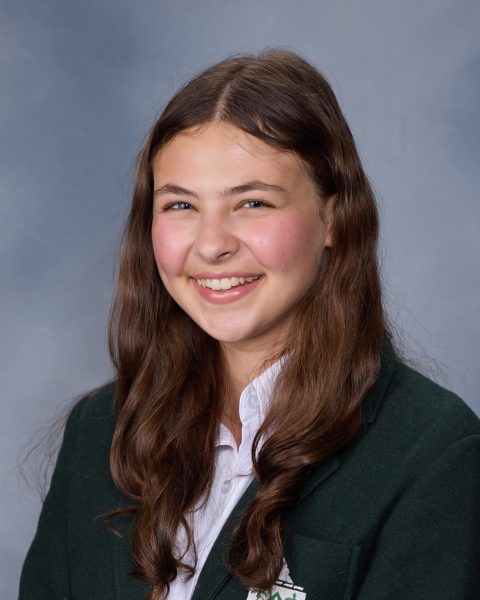












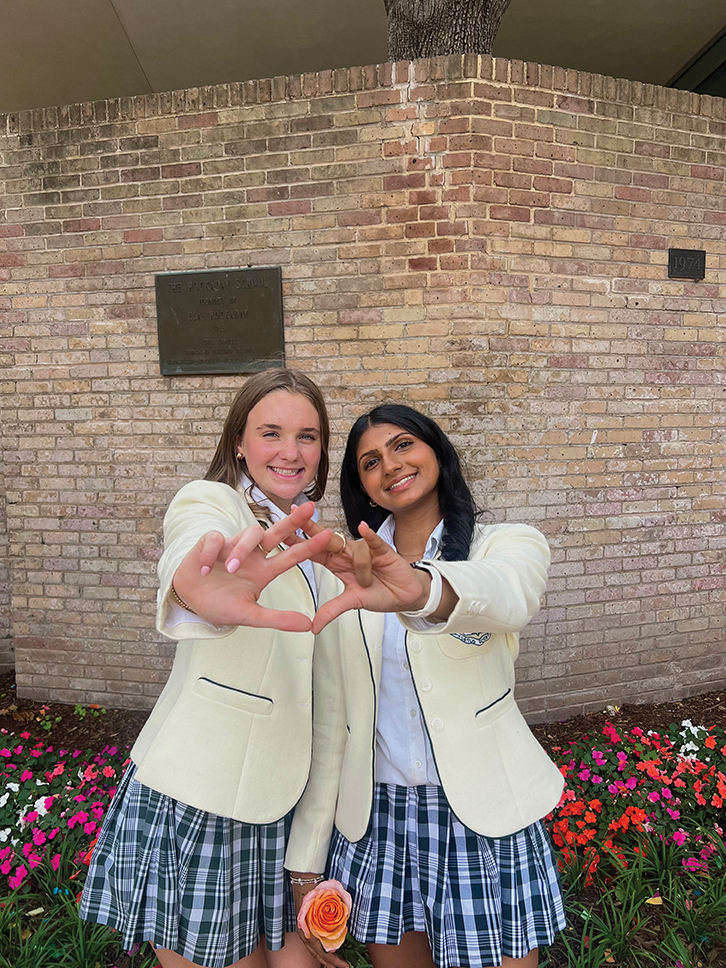





Freshmen Katie Helfrich and Hollis Wrighton began working to earn their Girl Scout Silver Award with a major goal in mind: advocating for a bike lane along Welch Road, which they describe as one of Dallas’ most dangerous pedestrian areas.
The inspiration for this project grew out of tragedy when the death of a classmate galvanized Helfrich and Wrighton into action.
“It mainly came to our attention in the summer after our sixth-grade year,” Wrighton said. “There was a girl in our grade who was tragically killed while riding her bike in Southlake.”
The accident left a deep mark on their community.
“People just stopped riding their bikes,” Wrighton said. “I didn’t ride a bike for two years after it happened.”
As the pair began researching bike safety and combing through city documents, they learned about the Dallas Bike Plan.
“There is a Dallas Bike Plan that is supposed to add a lot of new bike lanes, but it is over a very long period of time,” Wrighton said.
The girls wanted a solution that felt less distant, and Welch Road was the perfect place to start.
“A lot of girls in our grade live very close, but their parents won’t let them bike because of how dangerous Welch is to cross,” Wrighton said.
This fear is common, as studies indicate that less than 8 percent of the general population is comfortable cycling without a bike lane. Putting in a bike lane has the potential to reduce risks of accidents and revive cycling among students.
Helfrich and Wrighton began reaching out to various members of the Dallas City Council to build support for their project. Unfortunately, their journey has not been smooth.
“[Adults] don’t really take us very seriously, which is disappointing,” Helfrich said. “You have all these kids that want to make a difference in their communities, and people just look over them because they believe they are too young and don’t have good ideas.”
Despite these challenges, the girls persevered, continuing their work long after earning their Girl Scout Silver Award. Recipients of the award must dedicate at least 50 hours towards a sustainable project. Helfrich and Wrighton always planned to partner together; the girls share a long friendship that stretches back to early childhood.
“We both went to Lamplighter before coming to Hockaday, and we both started here in fifth grade,” Wrighton said. “We’ve known each other for a really long time, since pre-K, and we have done Girl Scouts together for years.”
Teamwork helped Wrighton and Helfrich maintain confidence in their project.
“We’ve learned that working together definitely makes an impact,” Wrighton said. “You’re not going to be able to go through life working alone.”

Both students have received support and encouragement from their community.
“We have gotten emails from people who have said, ‘You’re really making a difference and an impact to help your community,’” Wrighton said. “‘We applaud you for this.’”
In addition to advocacy, the girls also tackled the technical side of their project.
“Katie spent eight hours learning HTML [HyperText Markup Language] code to put together a website with her dad,” Wrighton said. “She’s incredibly organized and helps handle the technology side of the project.”
They encourage people to visit their website at WelchRoadBikeLane.site and to sign their petition. Anyone 18 or older living in Dallas can sign the petition.
“We have a petition up on change.org that has almost a thousand signatures,” Wrighton said.
The two freshmen are grateful to those who have supported their efforts. Laura Day, Director of Innovation and Collaboration, helped Helfrich and Wrighton get their project underway.
“It was a natural thing for them to come to me,” Day said. “I think I got them off the ground and now they’re doing it without me.”
Day is excited to see where the girls’ work takes them, and she appreciates how much they have already accomplished.
“What I learn from them, and what I’ve learned from the 15 years I’ve been here, is students can do anything that they want,” Day said. “I think students have more capability than adults do.”
Day put the freshmen in contact with Hockaday Chief Operating Officer Joan Guzman. When Helfrich and Wrighton initially met with Guzman, he encouraged them while maintaining a level of caution and consideration for the potential bike lane’s longer-term effects.
“We’re blessed for the amount of land and property we have [as a school], but we are in the middle of a residential area,” Guzman said.
He explains that an immediate logistical concern of a bike lane is how it may affect morning and afternoon carpool, a highly coordinated operational feat. Outside Hockaday’s gates, a bike lane on Welch Road may be constrained by available road space and traffic.
“That means that we have to be thoughtful about the impact that anything that we do on campus has on our neighbors,” Guzman said.
The city of Dallas requires Hockaday to conduct a traffic management assessment every other year to monitor the school’s impact on neighborhood traffic patterns and ensure that its presence does not result in adverse consequences for nearby residents.
“We want to maintain a positive relationship with those who live in the areas around our campus,” Guzman said. “It’s critical that we keep that in mind as we make decisions that could potentially impact them.”
Despite the potential logistical challenges, Guzman said he is impressed by how adeptly the young Daisies took initiative. He was eager to connect Helfrich and Wrighton with Dallas City Council Member Gay Donnell Willis, who represents District 13, which includes Hockaday.
Guzman urges other students to take action to address issues they care about.
“The immediate trigger answer from folks when a new idea comes forth is to say no or push back,” Guzman said. “Don’t be discouraged by that. Do your research, ask questions, remain curious.”
Guzman also reminds students to be patient as they work to create change.
“Big ideas take time, and progress doesn’t happen overnight,” Guzman said. “And if you’re leading with purpose, people will listen.”
The bike lane project is grounded in purpose and based on data: in 2022, more than 87 percent of riders involved in Dallas bike accidents suffered personal injury or death, according to Helfrich and Wrighton’s website.
“They’ve been able to raise awareness about something that’s important to them, they’re passionate about, and that’s rooted in a tragic accident, but that could potentially have some positive outcomes,” Guzman said. “They’ve been able to meet with leadership both in and outside of campus, and I think all of that, ultimately, will end up in some sort of change.”
Helfrich and Wrighton are determined to fight for improvement.
“If you don’t see a bike lane out there, we’re still working on it,” Helfrich said. “Even if it takes forever to get accomplished, the process and the thought are still making a difference.”