





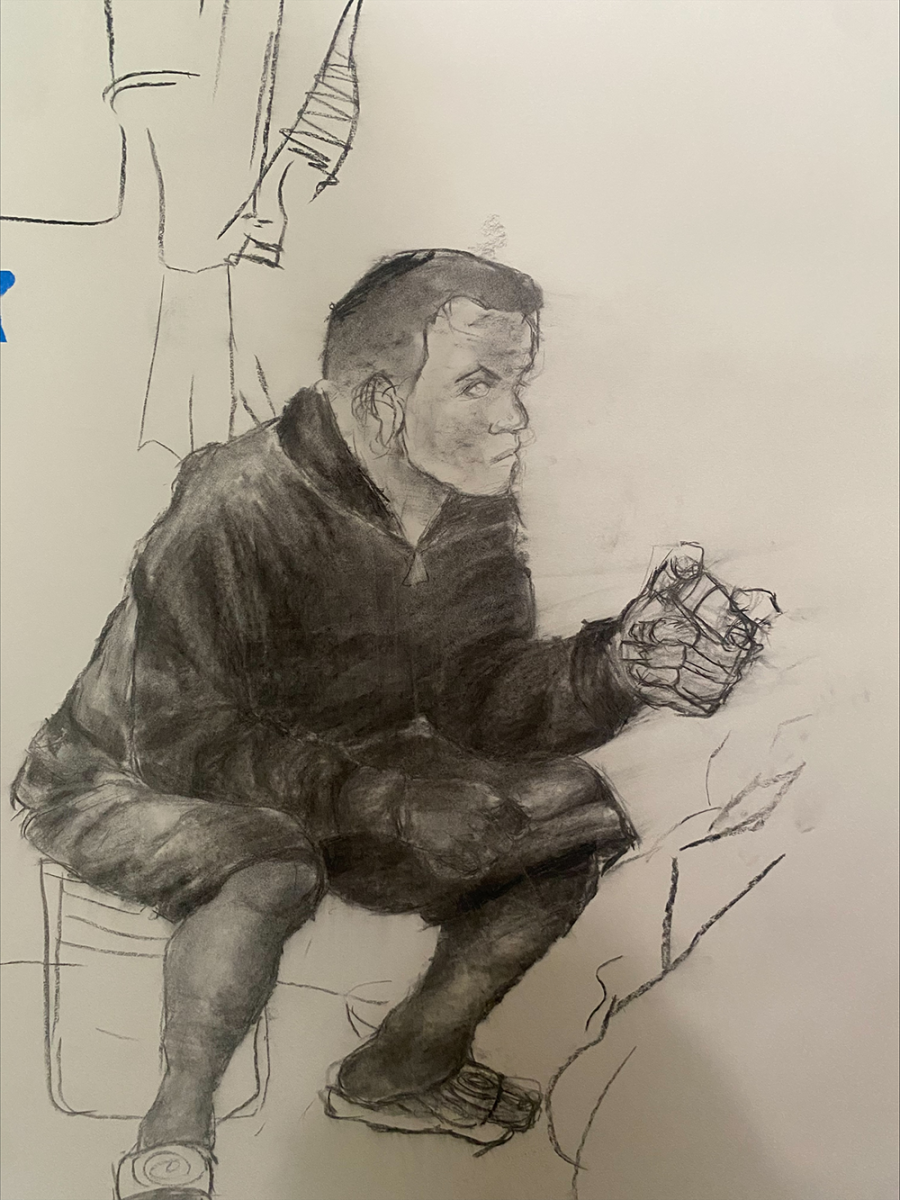
















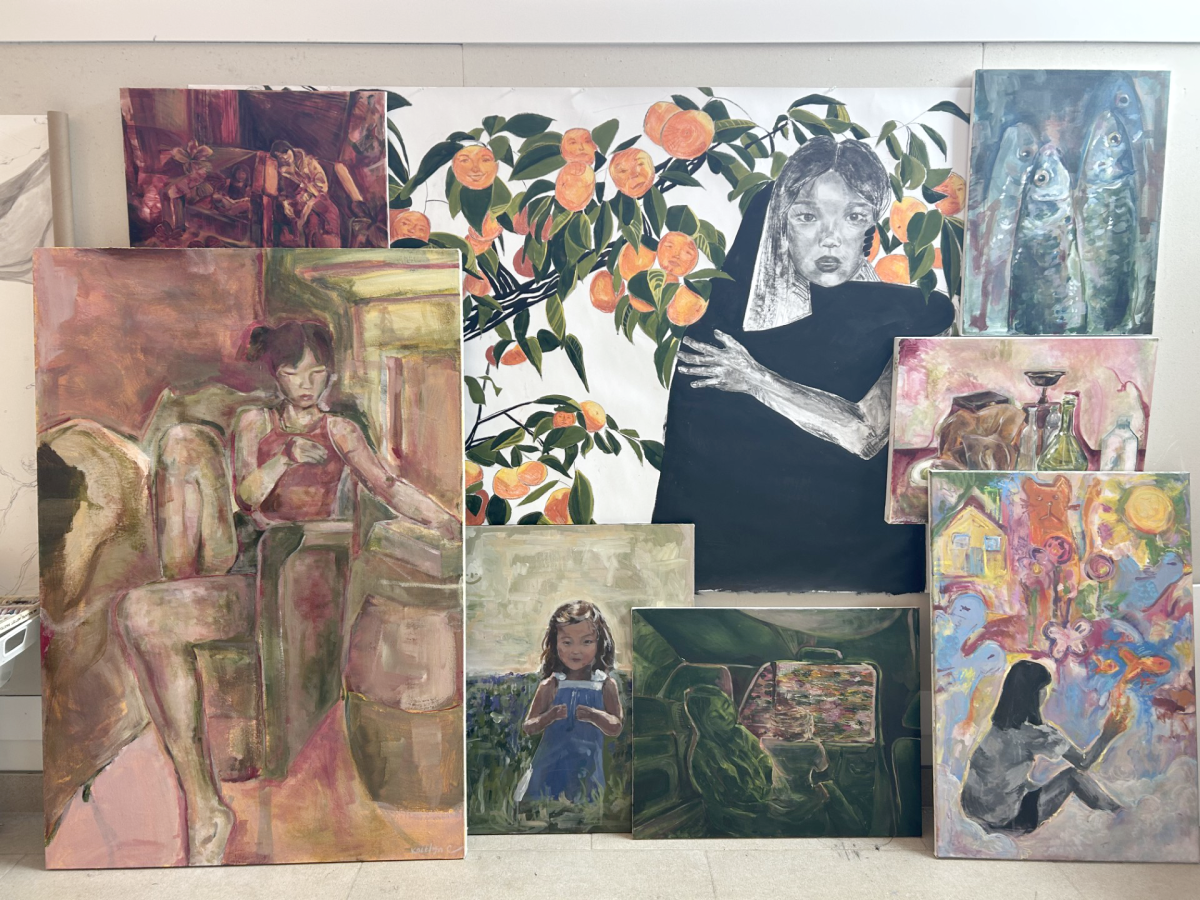
A small painting of a child standing in a field. A larger one, depicting someone staring at brightly colored drawings. The biggest one, showing a painstakingly drawn person with an orange tree. These paintings, and even more, comprise senior Kaitlyn Chen’s AP (Advanced Placement) Art portfolio, which she created over the course of her junior year. Although it’s easy to admire the paintings from afar, up close, each brushstroke shows how much work Chen put into this art.
Art students begin in an intro art class, where they build necessary technical skills, and then can progress into an advanced studio art class or into AP Art. There are multiple AP Art options available to students, consisting of AP Drawing, AP 2D Art and Design and AP 3D Art and Design. Each course focuses on a different area of art, with some being broader or narrower, allowing students to immerse themselves in different techniques.
Although the class is similar in many ways to an on-level art class, students in AP Art are required to make 15 pieces of art and must hold themselves to a strict schedule of deadlines to finish their portfolio in time.
“It’s a very self-paced class, where you have a lot of expectations, but if you don’t meet them, then it’s on you, because you’re the one who has to be making these pieces once a month,” Chen, who took AP Art last year, said. “I’m a person who works fast on my paintings, but it was definitely a challenge to still make them on time.”
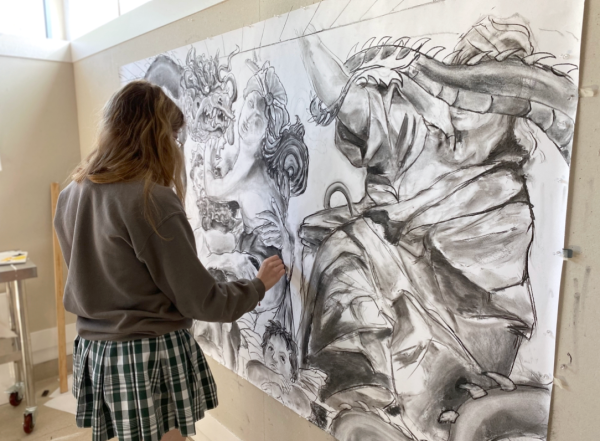
Chen’s portfolio centered around honoring your inner child. She enjoyed her experience in AP Art, believing that it was valuable and helped her as an artist.
“I appreciated the structured experience because it kind of relieved the pressure of having to do something new every time I create something,” Chen said. “However, it’s nice now that I’m done because I can create whatever I want, instead of something centered around a theme.”
Chen, reflecting on her experience last year, said she didn’t expect the workload to be so heavy.
“I expected it to be one of my easier AP classes last year, even though I had heard stuff about it being challenging given the amount of works we were expected to produce,” Chen said. “I think there was a point where AP Art was one of my hardest classes, or placing the biggest burden on me, because I had to have 15 things in the portfolio, and it’s a lot of pressure to work creatively on a time crunch.”
Junior Carolyn Mitchell, who currently participates in on-level Studio Art classes, plans to take AP Art next year.
“I think that the structure of the class is a good way to help students and emerging artists find their niche and style and also discover how they’re able to defend their artistic choices and think about the products that they are creating,” Mitchell said.
Part of Mitchell’s motivation for taking the class is the AP label.
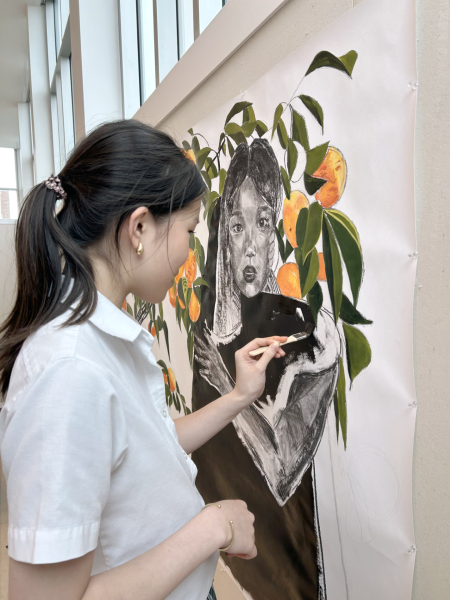
“The AP designation for an art class gives it a more academic feel, and it makes the class a solid achievement that you can say you completed, because most people don’t view art as an academic class that takes a lot of time,” Mitchell said. “Putting the class on the same level as another AP course demonstrates how much effort is put into the subject itself.”
Junior Madrid Garrett, currently in AP Art,
said she agrees with this opinion based on her experiences so far. Her portfolio focuses on female stories in the Bible, and how, sometimes, it vilifies women.
“As someone taking other AP classes, AP Art probably has a similar or greater workload,” Garrett said. “While other classes consist of memorizing and regurgitating facts on a test, AP Art is a continuous thing that’s always there to work on, because there’s always more you can do with your art.”
Garrett believes many undervalue art.
“I think a lot of people underestimate the fine arts, but I hope they realize the work that goes into them,” Garrett said.
Mitchell said that the heavy workload of art isn’t just limited to the AP art class, but is present in all art classes, as she spends many free periods or time at home working on her art.
“Art is a very undervalued subject for all its intensity, and many academic classes are more valued and seen as more impressive than most of the arts,” Mitchell said. “The workload in my arts classes can often be heavier than the workload in some of my technically academic classes, so I think it’s a bit ridiculous to view art as an easier class.”