































For generations, the biggest crowds and brightest lights in global sports have belonged to men. Though a new wave of women athletes is pushing female sports into the spotlight in America, disparities still exist depending on the sport, athlete and location. Hockaday athletes have had mixed experiences in their respective sports.
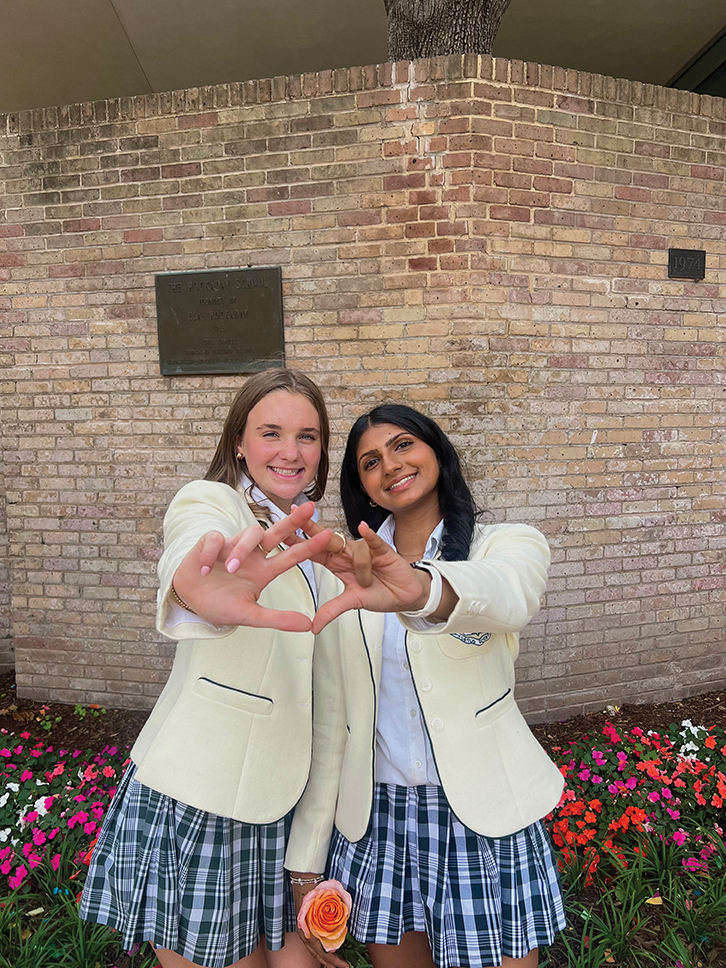
Junior Brooke Eckert has played lacrosse since fifth grade, choosing the sport after seeing her brother and his friends play. She is currently verbally committed to play lacrosse at Brown University after she graduates from Hockaday in 2027. Playing on varsity lacrosse since freshman year, Eckert believes the community is an essential part of the team.
“We all have a similar understanding that we are here to win,” Eckert said. “It’s very competitive, but it’s also healthy. We do team dinners and team events, where everyone is there to support each other.”
Every year, Hockaday varsity teams compete at the Southwest Preparatory Conference (SPC), an athletic conference for private high schools in Texas. Varsity lacrosse has a commendable record, winning its fourth consecutive SPC state title in 2025. During Eckert’s freshman year, Hockaday’s Division 1 team won state for the 7th time, but their trophy was noticeably underwhelming in comparison to the male Division 2 team.
“We, as a Division 1 school, were given a slab of glass as our state trophy,” Eckert said. “The men, who were Division 2, were given an entire gold cup. You couldn’t even see the trophy in pictures, and it was around a third of the size of the men’s trophies.”
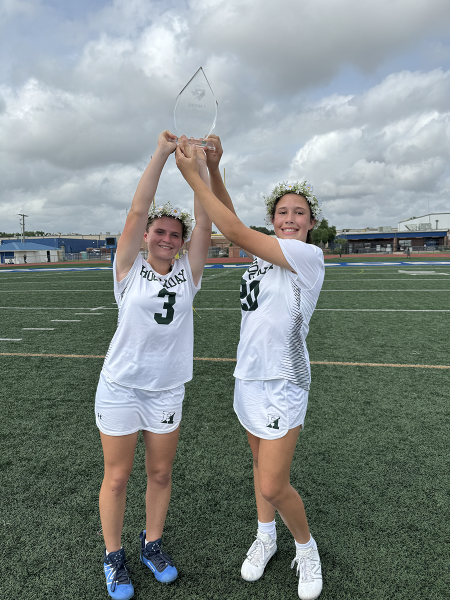
In addition to trophies, the team hired the same videographer as an all-boys school in Dallas for the same event. Hockaday, however, received a different product than their male counterparts.
“The guy that we hired chose to go to the boys’ games instead of ours and brought his backup camera crew to our game,” Eckert said. “He also made these short clips that he posted of the men right after the game happened, but we didn’t get our film until two weeks later.”
Although she has noticed some gaps in attention given to female athletes compared to male athletes, Eckert isn’t bothered by it in her everyday life.
“I have been in the lacrosse world for so long that it doesn’t really impact me anymore,” Eckert said. “I am here to do my best, and I can say the same for my teammates, so that is what we do.”
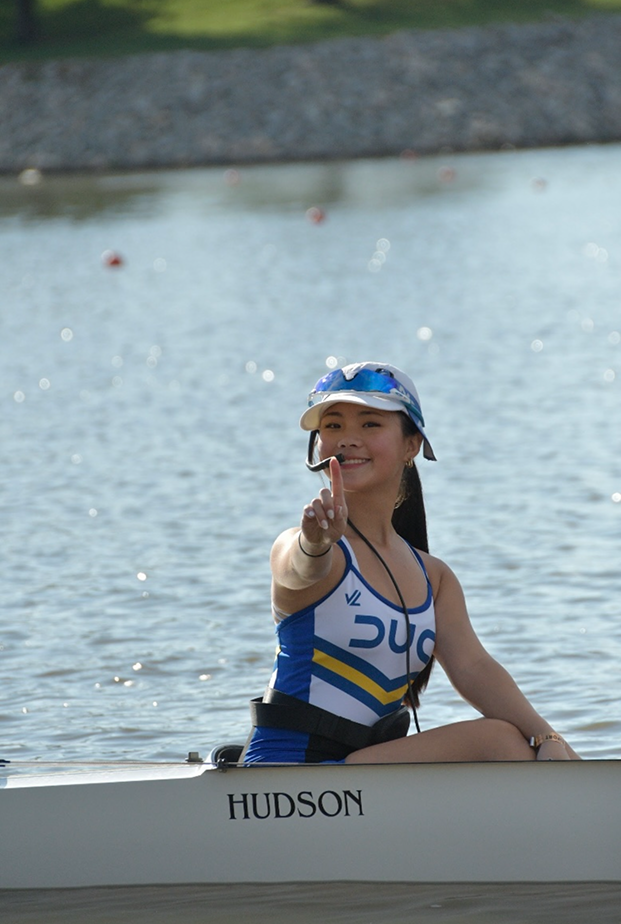
Erin Yuan ’25 was a member of a club rowing team, Dallas United Crew (DUC), from freshman to senior year. She began as a coxswain for the girls’ team, the person who steers and commands the rowers, during her sophomore year. Yuan described the culture of the team as very competitive but also encouraging. Coxing at a club team, Yuan experienced a co-ed rowing experience as opposed to the all-girls experience at Hockaday.
“I would say one of my favorite things about rowing and the reason why I stayed in the sport for so long was because of the people on my team,” Yuan said.
Yuan was very close with the girls on her team, but she never had the chance to bond with the men’s team.
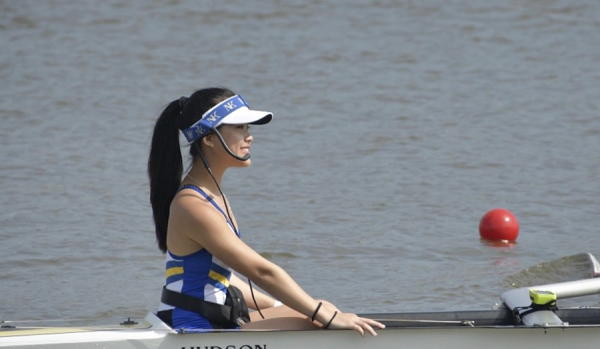
“At least for my years there, the men and women’s teams were pretty divided,” Yuan said. “We wouldn’t interact with each other or share practice times.”
DUC is a co-ed club with separate coaches and sub teams for both genders, which led to different performances for the two sexes.
“We had more girls on the team, and our women just happened to perform better,” Yuan said. “That created a chain reaction where the club was investing more time in the women’s team.”
This outperformance on the women’s side led to an imbalance between the men and women. The coaches had to account for those differences when deciding what boats to send to regattas.
“They would cut down boats for the women, while they would send an extra boat for the men’s team so that more people could go,” Yuan said. “They tried to make it very equal, but equality doesn’t always equal equity.”
Yuan’s time at DUC was mostly positive, and she looks back on the coaches and their treatment of the women’s team as generally fair.
“I don’t think there was any gross mistreatment towards the girls,” Yuan said. “If anything, the boys sometimes got the shorter end of the stick when it came to equipment.”
Now at Duke University, Yuan reflects on her time at Hockaday with gratitude for the importance they placed on athletics.
“I think being at an all-girls school, specifically one that was very sport-driven, changed my perception of sports,” Yuan said. “Having that many women excel in their individual sport was amazing, and that was the norm. Honestly, I applaud Hockaday for that, and now that I am gone, I really see the value in that.”
While Yuan felt her team was treated equitably, junior Margaret Hohenshelt had a different experience when she joined a rowing club during her semester abroad in Zaragoza, Spain, during her sophomore year. When she first joined, she felt out of place as a foreign student.
“I was not exactly given a warm welcome by my teammates,” Hohenshelt said. “A lot of times I just felt like no matter how hard I tried, no matter how fast I was, my teammates would never include me.”
It wasn’t until studying abroad that Hohenshelt realized how many opportunities female athletes have in the United States compared to abroad because Title IX, a landmark 1972 federal law which prohibits gender-based discrimination, specifically in sports. Before her semester abroad, Hohenshelt knew what Title IX was but was not aware of the extent of protection it serves.
“I was pretty familiar with [Title IX] because of Hockaday,” Hohenshelt said. “We even have a boat named Title IX. I’d be reminded of it every once in a while, especially because our old coach, [William Forteith], would remind us of how we, as a team, have the opportunity to be here. And then I went to Spain, and it was interesting because it wasn’t there.”
In Spain, there were noticeable differences in opportunities given to men and opportunities given to women. The number of men sent to nationals compared to women was noticeably less, regardless of talent. The most noticeable factor for Hohenshelt was the lack of support that the female athletes had.
“The really fast girls had so much potential, but no one was trying to give them what they were giving the guys,” Hohenshelt said. “The guys got nicer equipment when we were lifting or erging, but the girls didn’t; it didn’t bother them because they never really thought of it. The expectations for them weren’t as high when their potential was maybe even higher than the boys.”
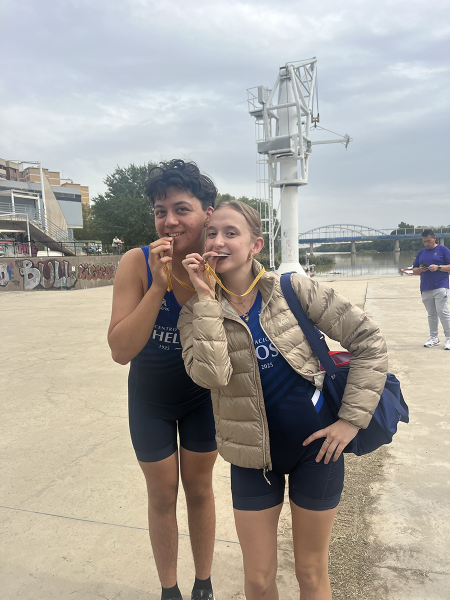
Hohenshelt felt that the girls were not regarded as true athletes and were instead looked at as casual participants.
“It was expected that every man on the team could thrive, but there wasn’t the same expected of every girl,” Hohenshelt said. “It was more believed that the girls were there to have fun.”
Returning to Hockaday, Hohenshelt realized the harsh difference between the support system in Zaragoza and the support system at Hockaday.
“The support that those guys got is what I feel every day at Hockaday going to practice,” Hohenshelt said. “I think that being in Spain really hindered how much potential I had to improve sophomore year. I didn’t get as fast as I could have because I didn’t have anyone believing in me like the Hockaday coaching staff.”
Hohenshelt’s journeys abroad reminded her of what to appreciate at Hockaday. She asks her fellow athletes to share the same understanding.
“It is such a gift that we have that barely any other country in the world has,” Hohenshelt said. “In regard to sports, we are so incredibly privileged for women to have the opportunities we have. It is a lot harder to experience this discrimination and stand up for yourself when there is no one to back your corner. Recognize how much we have compared to every other person, not just every other person in Dallas, but every other girl in the world.”