






















Hockaday is an incredibly diverse school. However, the experience of any minority group at a school will always differ from the experience of their peers. Black students at Hockaday have experienced undermining comments, microaggressions and stereotypes. However, support systems like Black Student Union (BSU) or even confiding in teachers can help give these students a sense of community.
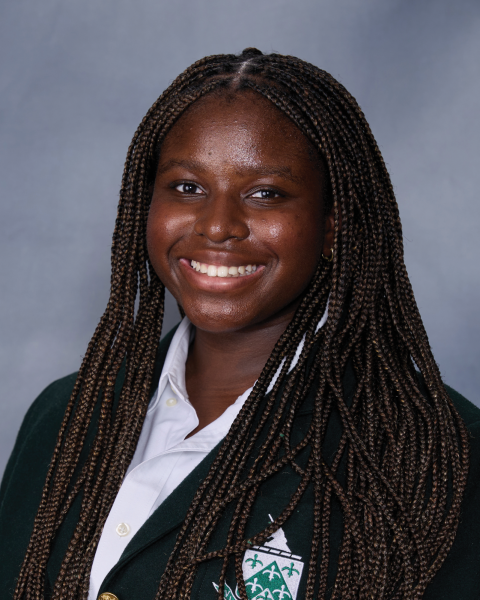
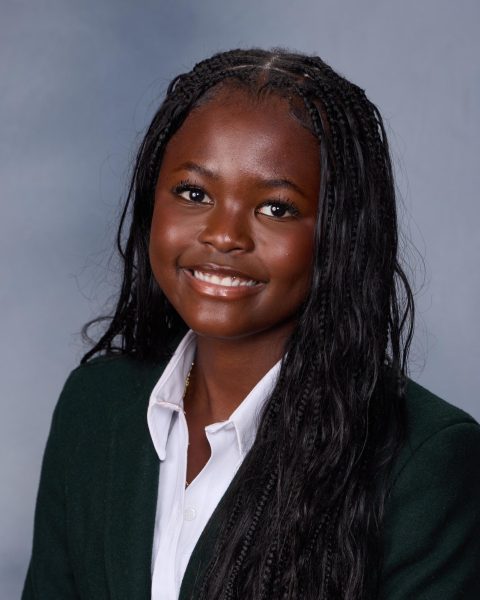
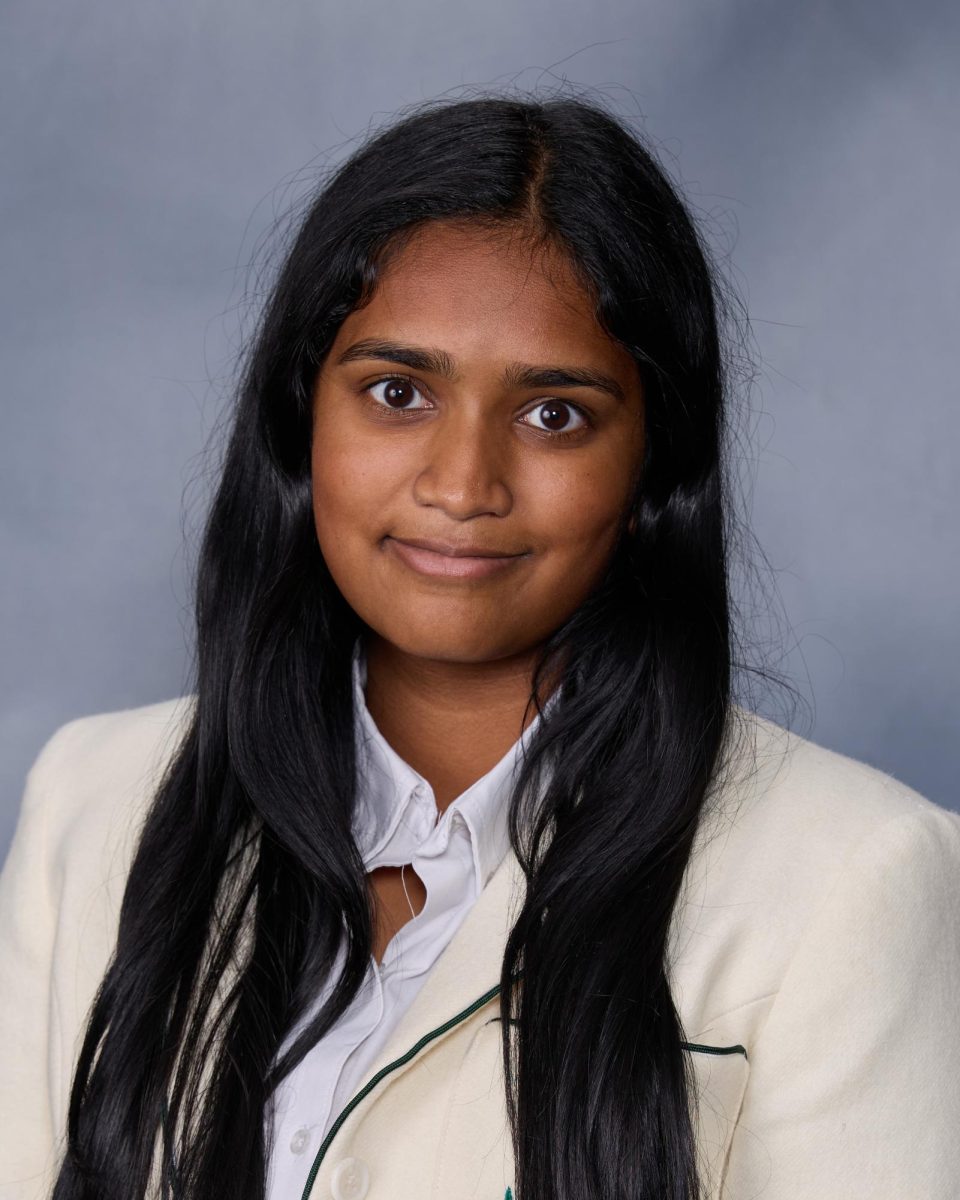
Junior Tari Agbeyangi came to Hockaday in her freshman year. She has now found a sense of belonging but has had some difficult experiences along the way.
“I feel both visible and invisible,” Agbeyangi said. “There are some situations that I look around, and I’m one of the only Black people there, and it sometimes makes me uncomfortable. However, there are also times when I look around and see a lot of Black people, for example in BSU.”
Situations like mixing up a Black peer’s name with another Black student’s or making assumptions can make that person feel like they aren’t truly seen.
“A lot of the time, people mix up my name with another Black person that does not look anything like me,” Agbeyangi said.
Cultural differences, different upbringings and the norms that both of those factors create can make minority groups feel isolated from their peers.
“A lot of times, I feel a need to keep my opinion to myself when I’m around a certain group of people because they wouldn’t understand my perspective or they would just shut me down,” Agbeyangi said.
However, throughout this all, Agbeyangi has found a strong support system. Her connection with other Black students and Black teachers has given her a sense of belonging.
“A lot of times whenever I find myself in need of something or advice, I always go to Coach Eb [Ebeneiro] or Ms. Mims,” Agbeyangi said. “They know the certain restrictions that I have as a person of color and can give me the right advice.”
These support systems have helped Agbeyangi find herself, her voice and the people that she can lean on in an environment that wasn’t always comfortable to her.
“My experience so far at Hockaday has taught me that there are safe spaces for me to ask for help,” Agbeyangi said. “I want younger Black Daisies to know that there will always be someone willing to help you out, even though it may not seem like it.”
Senior Gabby Carter serves as BSU’s Affinity Council Representative. She came to Hockaday as a freshman from a school that was less diverse.
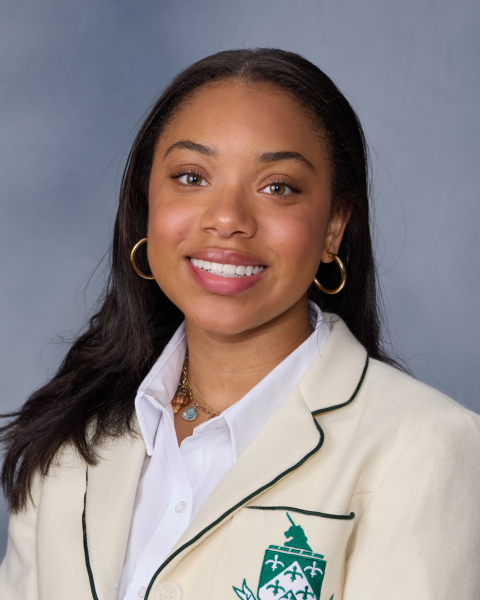
“My old school was very predominantly white, with my brother and I being the only Black kids and some of the only students of color from elementary school all the way through middle school,” Carter said. “Coming to Hockaday allowed me to embrace different and similar perspectives. I remain very grateful that I have had that opportunity.”
Although Hockaday is extremely diverse overall, it is not a predominantly Black space. This can lead to some Black students possibly feeling not equally valued or respected by their peers inside and outside the classroom.
“I believe that my opinion matters and is heard at Hockaday,” Carter said. “However, there have been times where it’s hard to turn a blind eye to conflict.”
Carter has also had experiences with receiving racist remarks or facing microaggressions.
“[Some peers] perceive Martin Luther King Jr. Day as a party weekend and say that ‘people of color are asking for [racism],’ but it seemed to be shrugged off,” Carter said.
Amidst difficulties along the way, Carter has held on to her authenticity. She credits her close relationship with other Black students at Hockaday for this.
“I have never felt this pressure [to change] because I surround myself with other Black people in my social life, and my academic paths at Hockaday have been rooted in diversity,” Carter said.
Carter deeply appreciates her teachers for providing unconditional support to her.
She values the lessons that Hockaday has taught her and how they have empowered her to use her voice in all kinds of environments.
“[Being at Hockaday] has allowed me to be the authentic version of myself,” Carter said. “I would tell younger Black Daisies not to be afraid to speak up or address their concerns because most of the time others will follow.”
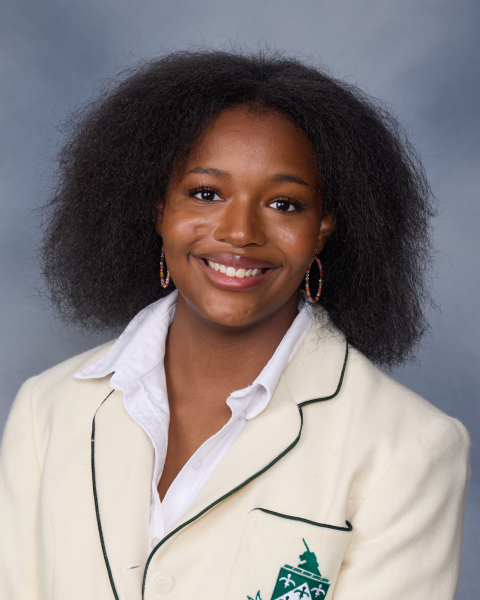
Senior Cortney Buford serves as Upper School student council president and BSU co-president. During her Hockaday career as a ‘lifer,’ she’s had multiple experiences where she said she has been treated differently because of her racial background. She recalls facing her first microaggression in Lower School.
According to Merriam-Webster dictionary, a microaggression is “a comment or action that subtly and often unconsciously or unintentionally expresses a prejudiced attitude toward a member of a marginalized group.”
Although Buford now speaks in front of the entire school as the student council president, she wasn’t always confident speaking up.
“People thinking that I’m dumb is probably the biggest [stereotype] that has affected me,” Buford said. “When I was in Middle School and Lower School, I would never talk in class because I was nervous to get things wrong, because I didn’t want people to think less of me and think that I was stupid. So, I simply wouldn’t talk. But that’s something I’m over now.”
Buford said she still encounters microaggressions that attempt to undermine her accomplishments.
“I feel like people don’t like to acknowledge the fact that I am smart because I am Black,” Buford said.
An example Buford recalled was in eighth grade. She told her peers that she was in an advanced math class that year, and her success was met with doubt rather than celebration.
“I said that I’m in the enriched math class, and [when I told them that] they were like, ‘You? You’re in the enriched math class?’” Buford said. “That was when I definitely felt unseen.”
In addition to comments about her academic capabilities, Buford said classmates would comment on her appearance in middle school.
“[I’d receive] questions like, ‘Is that your real hair?’ ‘Your hair was like this yesterday. What happened?’” Buford said. “This girl was like, ‘Wow, your hair is so small. It makes your face look huge.'”
However, while facing these comments, Buford held on to her community, which kept her strong.
“[BSU] has been a space where we all get to be together and talk about those shared experiences and slight comments that people make [to us],” Buford said.
Outside of school, Buford represents Black excellence through her family and their commitment to true authenticity in spaces where they stand out.
“My family has been a big [support system] because my parents didn’t grow up going to a predominantly white institution,” Buford said. “They’ve always been confident in their Blackness, and I think that’s something that I’ve struggled with for a long time. Seeing them in a professional space and being so enthusiastic about who they are… is something that I was able to really look up to.”
Buford credits her discovery of her identity to the example her family set and to the support of her friends at Hockaday.
“When I was younger, being Black was something I was ashamed of, but now that I’m older, that’s the biggest part of who I am,” Buford said. “You couldn’t give me all the money in the world to change that. I think that’s the biggest thing, just to be confident in that and to live in that even when people don’t want you to.”