
























Many Division 1 athletes find that graduation not only marks the end of their sports careers, but also the loss of structured routines and identity some have spent the majority of their lives developing.
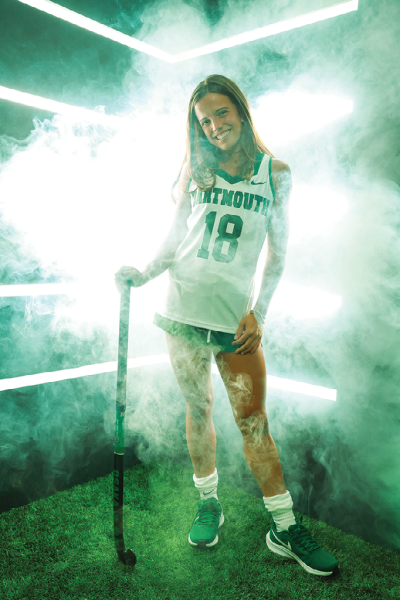
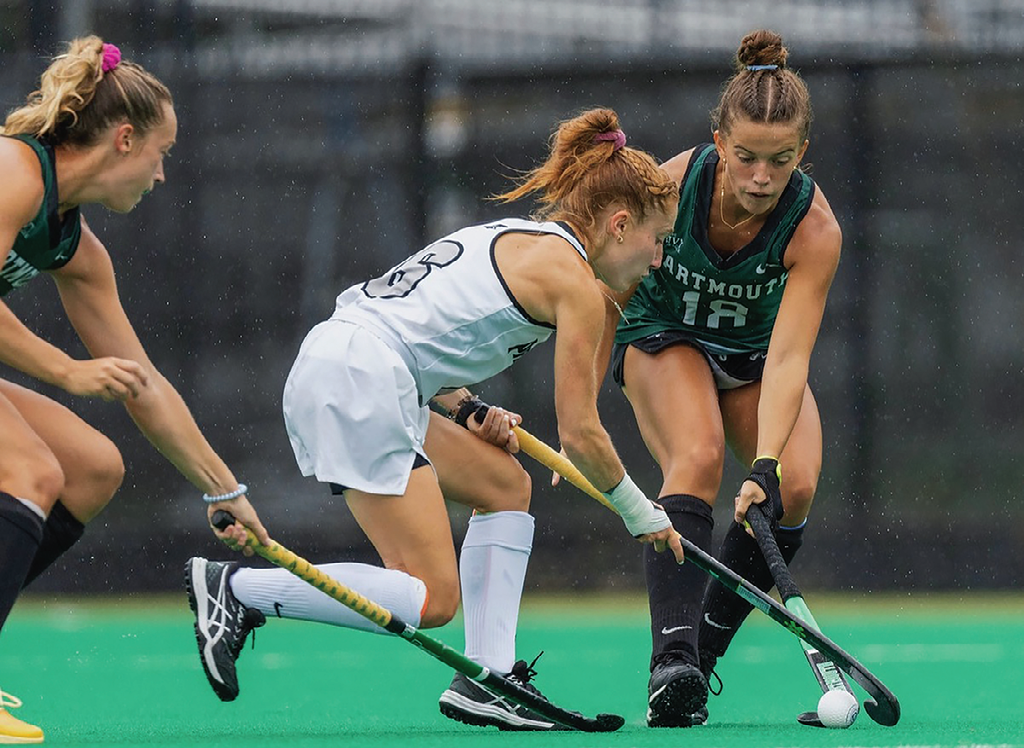
Dartmouth field hockey graduate Emilia Callahan ‘21 shares her struggle with a lack of daily prescribed activity after her final season came to an end.
“The biggest change in my routine was not having someone telling me when and how to work out all of the time,” Callahan said. “This definitely had its pros and cons, but it was good in the sense that I had to create a new schedule for myself and balance fitness with other activities.”
Another challenge Callahan faced was figuring out who she was without the uniform on. She said that separating her sport from her identity was very difficult and remains something she still grapples with.
“It definitely was a journey, and one I am still on, trying to figure out what my passions were outside of field hockey,” Callahan said. “I also feel like being an athlete was something I would turn to when things weren’t going well in other aspects of my life. Without that, I had to find new ways to gain validation both internally and externally.”
Callahan said that athletics had been a major source of validation for her, especially during stressful parts of her life.
“Without field hockey, I felt the ‘lows’ when things weren’t going well a little harder because I didn’t have the boost from sports to pick me back up,” Callahan said. “So, finding new ways to cope with that was very important to my happiness.”
Although Callahan is learning to transition away from some aspects of her athletic career, she continues to carry valuable lessons beyond college.
“College sports are interesting because they bring in people from all over the world with varying values and cultures and expect everyone to work together seamlessly,” Callahan said. “But being on a team for four years taught me how to work with people who were not similar to me and still be able to see eye to eye.”
Playing on the field hockey team also shaped Callahan’s mindset and how she approaches her work.
“Although my coach was the one ultimately calling the shots, I still feel like I was directly responsible for my fate,” Callahan said. “However hard I worked and the amount of effort I put in directly correlated with my outcomes on the field. This mindset has translated to my life after college in that I try to hold myself accountable to the things that happen in my life, both good and bad.”
While Callahan is redefining her life after athletics, senior Lillian Sells, who is committed to Georgetown University for rowing, sees her D1 future as part of something bigger.
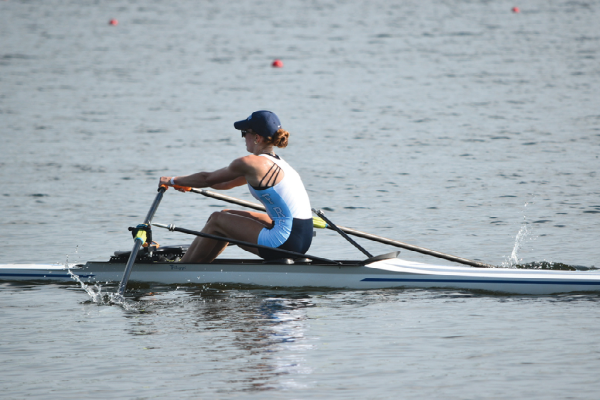
“I see the opportunity ahead of me as a starting line for my life outside of high school,” Sells said. “The independence that I have gained so far will be challenged and expanded on the next level, and I am so excited to see how I can push myself.”
While Sells is excited, she also acknowledged the transition to a competitive Division I environment will be a challenge.
“I am most nervous about, but also very excited for, the constant level of competition,” Sells said. “I know it will push me to be my best, but I also know it will take time to adjust.”
Sells views rowing as something that will shape her long after her final race.
“I do see college athletics as the peak of my athletic career, but my sport has taught me so many things that I hope to apply to my future in the professional setting,” Sells said. “Learning to work alongside other people for a common goal is something I will carry outside of rowing itself.”
To avoid becoming defined solely by her sport, Sells has been intentional about cultivating balance early on.
“I am very confident that the time management skills that I have practiced for the past three years will work in my favor as I transition to a more rigorous training schedule,” Sells said. “I also like to stay involved outside of athletics now, which is something I plan to do in college as well to give me the most balance possible.”
While some athletes experience an abrupt transition when beginning their journeys in college athletics, Harvard Lacrosse player Charlotte Schultz ’25 said her move to the collegiate level felt more like a continuation rather than a disruption.
“Honestly, there haven’t really been any big culture shocks, especially in my routine,” Schultz said. “Going to Hockaday and playing a sport in high school, especially with club [lacrosse], while doing all of the other things Hockaday girls do, is good preparation for college athletics.”
Schultz said her sense of identity has remained steady as she starts her career in D1 athletics.
“I don’t think my identity has changed at all,” Schultz said.
As a freshman in college, Schultz views her commitment not as a final achievement, but as the start of a longer journey.
“Committing is definitely just a new starting line,” Schultz said. “It’s the end of one race, but the start of a new, and probably more challenging, one.”
While aware of life beyond athletics, Schultz explains how she is focused on being present as she adjusts to college life.
“I’m definitely planning my career path after college with internships and jobs and stuff,” Schultz said. “But I’m really just focused on enjoying the time I get to have with my teammates and playing an awesome sport,” Schultz said. “The time goes faster than you think it will.”