
















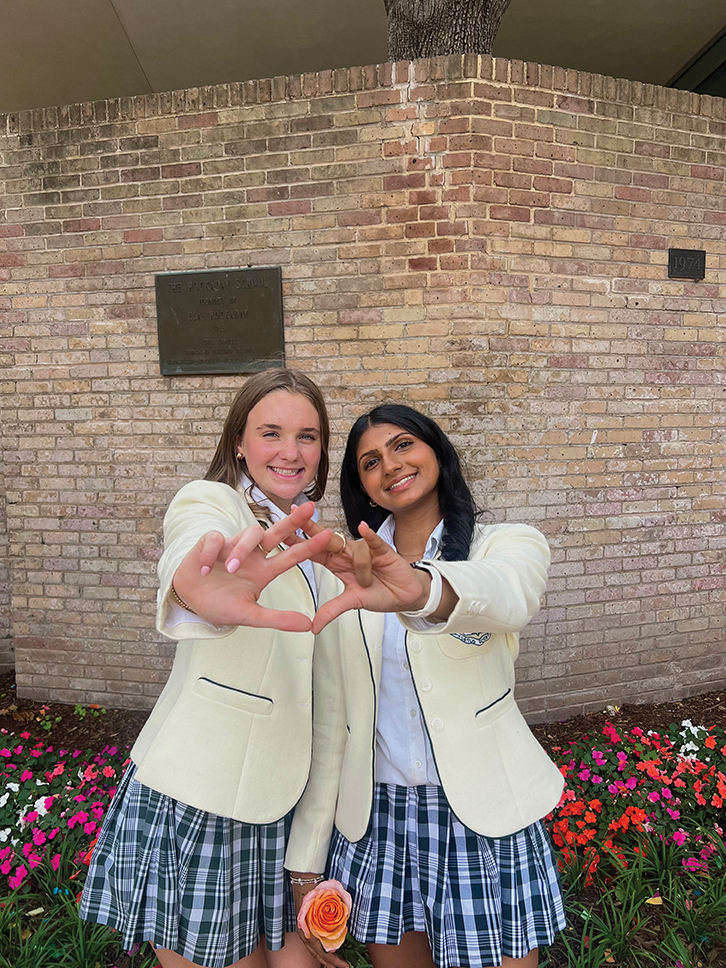






After spending more than 80 hours each in separate projects, seniors Ava Ortega, Peyton Johnson and Laila Scott worked in passion projects to achieve the Gold Award. The Gold Award is the greatest honor for a Girl Scout to receive and the highest possible award. To earn it, girls develop a long-term solution to a problem in their community and address it.
Ortega “boxes” technology
Ortega’s Girl Scout career started in first grade when she saw a Girls Scouts advertisement and immediately knew she wanted to join. There weren’t any troops in her region, so her mom started one. After nearly 10 years with her troop, getting her Bronze and Silver awards in the process, Ortega set her sights on the gold award.
“I thought [pursuing the gold award] would be a really good opportunity to put my skills to the test and apply what I learned doing [the bronze and silver awards],” Ortega said.
Ortega spent her summer before junior year at the Social Innovator Program at the University of Pennsylvania. There, she worked with peers to address a community issue through entrepreneurship. After the program, Ortega decided to use the skills she developed for her Gold Award.
“I conducted a lot of interviews to see why people were so stressed about homework piling up,” Ortega said. “What I found was that a lot of girls were using their phones during their free time at school.”

She felt that completely taking away students’ phones would spark retaliation rather than solving the problem. So, Ortega developed “phone boxes” which students could choose to leave their phones in during the day. By getting away from their phones, students had better focus and more productive study sessions.
“The most rewarding part, I would say, was when, after my project was done, I had girls coming up to me in the hallway and saying that they used my phone boxes, and they found them really helpful,” Ortega said.
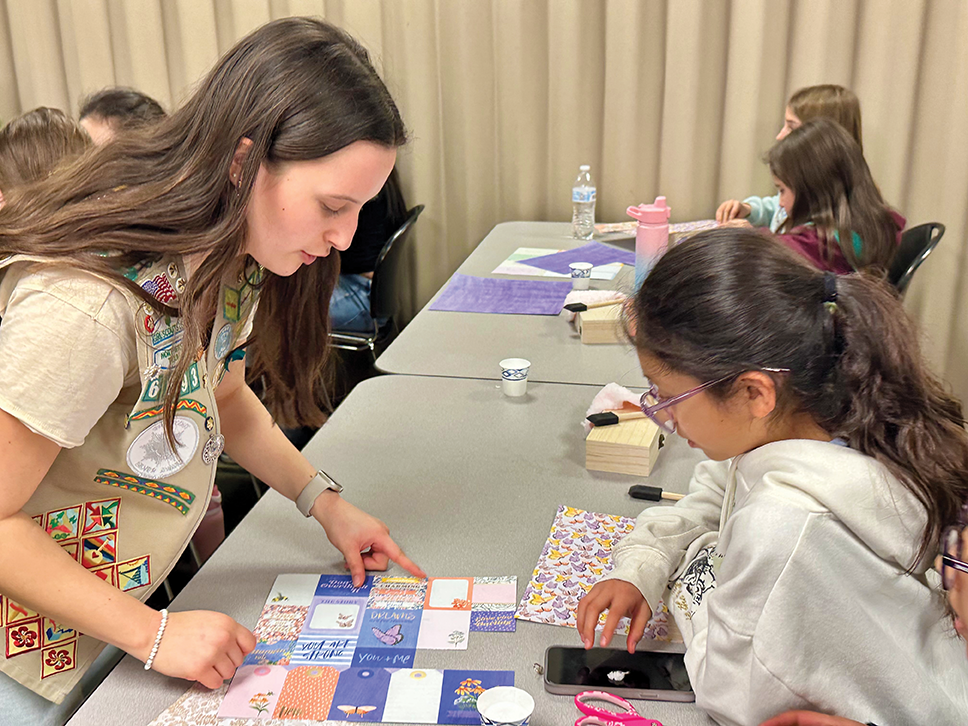
She also created a website about proper study techniques and how to disconnect from phones. She hosted workshops with Girl Scouts in her service unit to teach them about phone usage and how to make their own phone boxes.

Ortega said her project encouraged her to leave her comfort zone and taught her how to ask for help, skills that have proved invaluable.
“Every Girl Scout should do it,” Ortega said. “It’s a really good way to apply your skills and make a difference in your community and advocate for something that you care about.”
Johnson boosts Marcus music program
Johnson has been a Girl Scout since kindergarten and earned her Bronze and Silver Awards before earning the Gold Award. For her project, she combined her love of piano with a desire to make a difference in our community.
Johnson partnered with Marcus Elementary School to redesign its piano program. Drawing on her own experience, Johnson also leaned on information she learned from her teacher about music’s impact on brain development, memory and stress reduction.
“When I’m really stressed, I like to just go play piano songs,” Johnson said. “It’s calming for me. After learning there’s scientific evidence that it helps with stress and memory, I wanted to bring that to my community.”
After researching the Marcus piano program, she discovered the biggest problem was multiple students sharing a single piano during lessons.
“They had two or three students on one piano, which is really unproductive for practicing,” Johnson said.
She fundraised to purchase seven new keyboards and headphones, allowing students to practice individually without distraction. Beyond equipment, Johnson created original worksheets covering basic skills and arranged beginner-friendly versions of children’s songs for students to learn. She later hosted a summer camp to test her curriculum, culminating in a final performance for parents that she regards as her favorite memory in the process of earning the Gold Award.
“It was such a cool moment to see them actually perform something and be excited that they could play a song,” Johnson said.
She said the experience helped strengthen her self-advocacy and leadership skills
“Don’t let the beginning scare you,” Johnson said. “Once you get into the project and it’s something you love, it becomes an exciting journey.”
Scott develops tutoring program
A Girl Scout since Pre-K, Scott launched a tutoring initiative called Helping Hands at Nathan Adams Elementary School. After interviewing school leaders, she discovered that many students at Nathan Adams struggled with reading levels and English proficiency.
“Their STAAR testing levels were really low,” Scott said. “A lot of students were behind in reading and English speaking.”
What began as a small initiative her junior year has grown into a recurring tutoring program with approximately 30 student volunteers who provide one-on-one tutoring twice a rotation. Hockaday students in the program work with the same elementary students each time, allowing them to build long lasting and personal relationships.
“A lot of them have learning disabilities, and there are too many students in each class [for teachers] to focus on each one,” Scott said. “Through Helping Hands, they get the support they need.”
Balancing communication with school administrators and managing a large, multi-grade volunteer group proved challenging. The project spanned more than a year, requiring consistent discipline and motivation.
The experience sharpened Scott’s leadership skills and taught her how to advocate for herself with adults in professional settings. Witnessing the program’s impact firsthand, she hopes the program continues after she graduates, leaving behind not just a club, but a lasting legacy of service and empathy.
“Seeing [a long-term student’s] progress and being excited to see me every time, that really showed the impact,” Scott said.

