






















Since 1923, students have used the learning experience in The Fourcast as a launchpad for their entry into the ranks of professional journalism. Today, three alumnae are making their mark in a constantly changing field. From college to 30 years of experience, they offer a variety of perspectives.
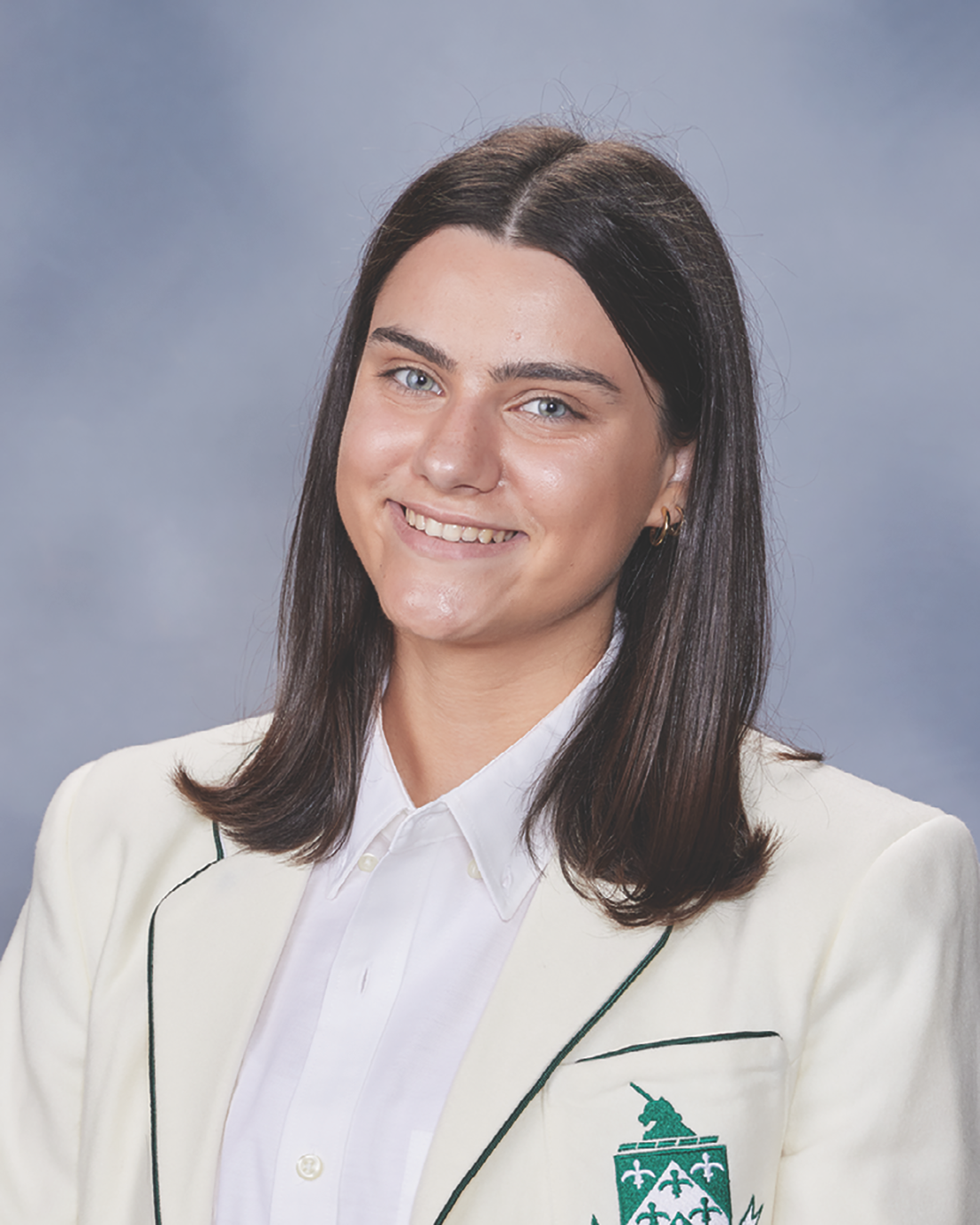
Harper Harris ‘24
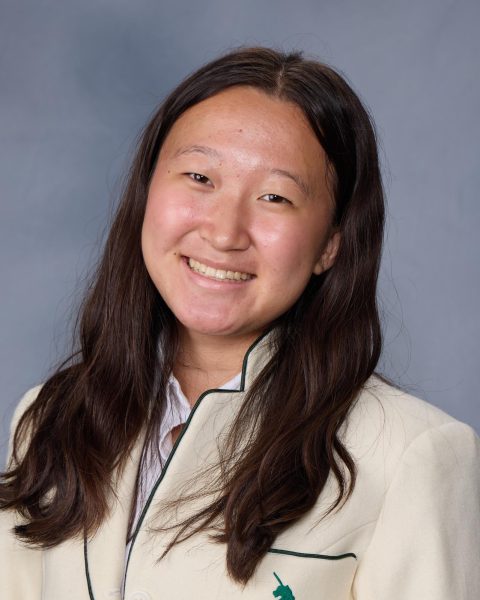
Former Fourcast Co-Editor-in-Chief Harper Harris ’24 is currently pursuing a journalism degree at the University of Texas at Austin (UT). She joined Fourcast after watching her sister take part in the student newspaper. Harris said she poured most of her time during high school into Fourcast, so majoring in journalism in college felt like the natural next step for her.
Serving more than 40,000 UT students, the Daily Texan is much faster paced with daily online content and a biweekly print edition. Harris, a social media reporter, works each week on Tuesdays, typically until 11 p.m. writing the copy for the paper’s social media.
“I don’t get to pick what I write,” Harris said. “I get assigned stories to write copy for. I don’t have any niche in it, but I definitely want to go into political and breaking news, investigative journalism and such.”
Harris credits the Fourcast for showing her the value of deadlines.
“At the Daily Texan, it’s very important to stay on deadline because if you turn in a story late, it kind of screws up the whole production process,” Harris said. “Staying strict to my deadlines as a staffer on the Fourcast made me realize, ‘Okay, this is really important because I don’t want to mess up anyone else’s schedule and mess up the paper’s integrity.’”
She has gained experience through classes like the Basics of a Newspaper, Ethics of Journalism and Social Media Journalism. Harris said her favorite class so far has been Reporting Images where she learned about photojournalism.
“When I was at the Fourcast, I didn’t really take photos or make videos or anything,” Harris said. “I only did the print side, so it was cool to do a whole other side of journalism that I’ve never done before. I don’t think I want to do it professionally or in my career down the road, but it’s a good skill to have.”
Still, Harris stresses the importance of acquiring experience on the digital side.
“Every journalist should know how to do the digital side,” Harris said. “Especially now, with social media and no one really getting physical print papers anymore, it’s really important to know how to use your cell phone to make a video or post photos, like on Twitter or on Instagram, to share information with readers.”
Faith Isbell DiBiagio ‘15

As a current web-editor of Bloomberg.com, Faith Isbell DiBiagio ’15 has witnessed the impact of social media and values its ability to reach a wide expanse of audiences.
“With the proliferation of social media and automation, we are constantly having to balance urgency with accuracy,” DiBiagio said. “As an outlet, you want to be first, but more importantly, you want to be accurate— – so getting as many readers as we can while also maintaining the integrity of our journalism and maintaining the trust of our readers.”
DiBiagio, a business journalism graduate from Washington and Lee University, works with her team to maintain a website where readers have access to a world-wide range of stories. DiBiagio and her team in the U.S. work with Bloomberg’s other hubs in Hong Kong and London to keep up with news all day, every day.
“We run the website for the US as well as other regions, including Canada, Latin America, Asia, Africa, Middle East, Europe and the U.K.,” DiBiagio said. “So, we are constantly monitoring those websites and curating them, adding stories, artwork, photos, visuals or charting the markets in real time.”
As web editor, DiBiagio’s role isn’t to write specific stories, but to work with teams on different stories, optimizing traffic and curating multimedia to attract attention to their website.
“We work in shifts, and we are in charge of the U.S. website from 7 a.m. to 8 p.m. ET,” DiBiagio said. “When it’s time for us to wrap up here, we hand over the website to our colleagues in Hong Kong and Sydney, so at any given point of the day there is someone [abroad] running the US homepage, just as we are also running Asia’s homepage in the middle of the night for them as it’s the middle of the day for us.”
By making sure the website is staffed at all times, Bloomberg ensures all the content is fresh and up to date.
“If there’s any breaking news in any of those regions, we are responsible for sending a push alert to their phone,” DiBiagio said. “But in that respect too, in my role, I have to be familiar with what’s going on in South Africa or in Thailand, like the geopolitical events, the major companies in those areas or the billionaires in each region.”
With all of these tasks, she still ensures that her purpose answers the question, “why should the reader care?” To understand what specifically attracts the reader, she analyzes the data Bloomberg.com accumulates.
“We have all of this data at our fingertips now that we’re constantly keeping track of, just in terms of what works and what doesn’t, what resonates with the reader, what keeps them reading and ultimately what keeps them paying for Bloomberg.com,” DiBiagio said. “I’m not a pen and paper reporter, but in my role, I am helping edit and optimize stories to the best of my abilities to do well online.”
Her tools include AI to help generate headlines and Search Engine Optimization to interpret data on readership.
“I feel like AI can allow us to focus more on our reporting and our storytelling, but ultimately, the editorial judgement, the heart of what we do, still lies with us as people,” DiBiagio said.
Mary Clare Jalonick ‘93
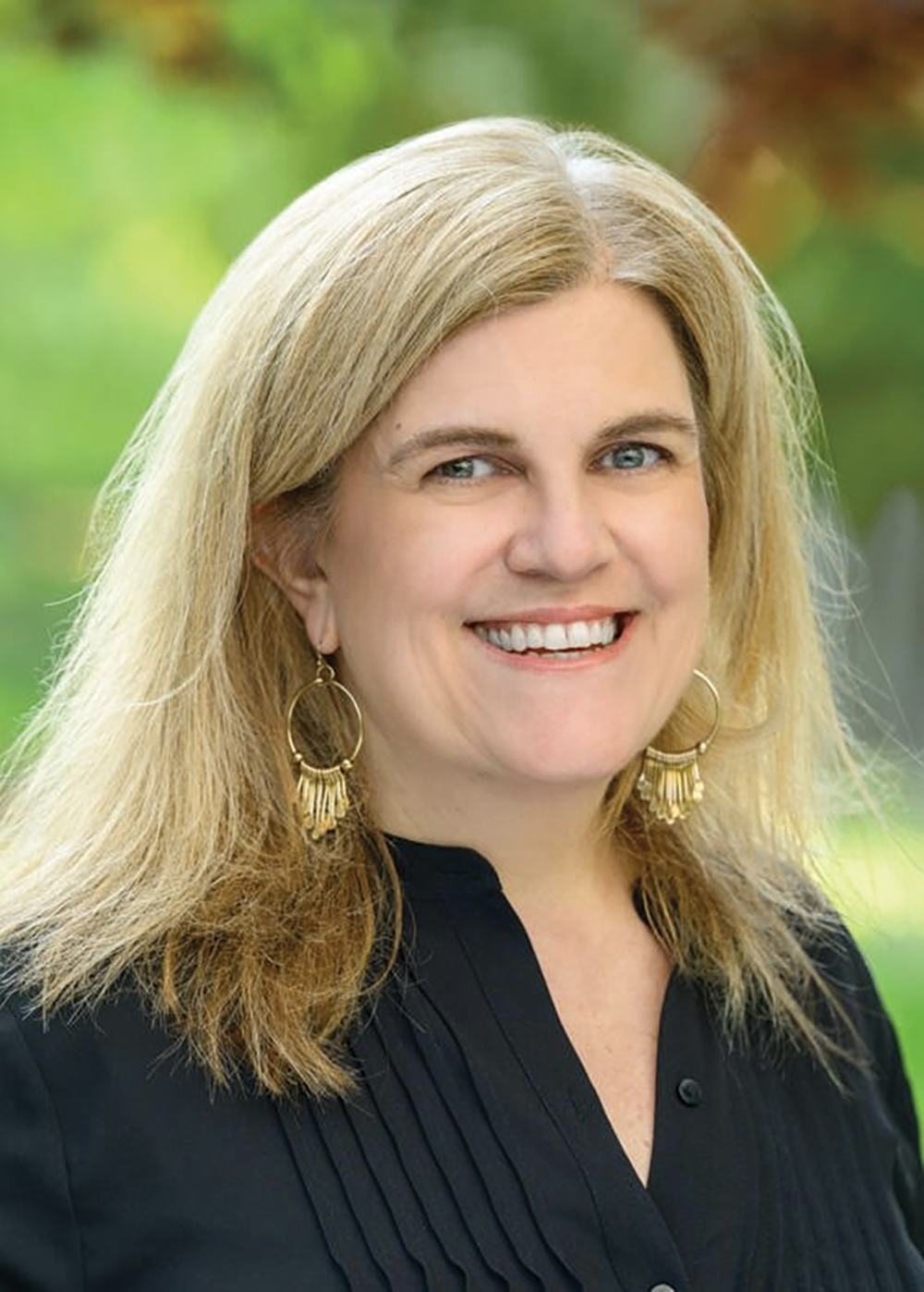
A reporter who covers Congress for Associated Press News (AP) in Washington D.C., Mary Clare Jalonick ‘93 focuses on maintaining credibility in her articles.
“You have to always remember that all sorts of different people are reading what you’re writing, and you really want them to trust you,” Jalonick said. “It’s so important to me that people look at my byline or look at the AP logo and at what we’ve written and feel like they’re able to trust what we’re telling them. We want to make sure that people do have faith in what we’re saying.”
Even with the increasing digitization of journalism, Jalonick recognizes that the core purpose of reporting still has not changed.
“There’s still a lot of people out there doing journalism and holding people accountable, and letting people know what’s going on out there,” Jalonick said. “It’s just a little bit different in the way that everyone’s consuming it.”
From working for Congressional Quarterly, a publication that covers Congress, to now working for AP, Jalonick can often be found covering stories in the Capitol building when Congress is in session. However, some of her busiest days occur when they are not in session; for example, when Homeland Security Secretary Kristi Noem was fired, she had to pivot and cover the change.
“It can get really fast and really busy, and then it can be a little bit slower,” Jalonick said. “Then, all of a sudden when you think it’s slower, then something big happens, and then all of a sudden, you’re busy again. So, you have to be always ready to move if something happens.”
Jalonick’s adaptability to the inherent unpredictability is a vital skill in her career. Jalonick was on site covering the Capitol riots on Jan. 6, 2021. She wrote another article on the 1-year anniversary of the event that focused on the lawmakers who were trapped in the Capitol building.
“I had a lot of interviews I’d already done when people told me their experiences, and I wasn’t able to use all of that, because if you look at a normal article, you’re just using quick quotes from whoever you talk to,” Jalonick said. “I did all these different interviews, but I was only able to use parts of them for the story.”
This inspired her to write her first book, “Storm at the Capitol,” which features interviews from police officers, lawmakers and staff, among others who experienced the event first-hand. With all of these different and sometimes clashing perspectives, Jalonick found it difficult at times to sort through partisanship and opposing viewpoints. She relied on facts to lay out the different sides of what people are saying.
“It’s really important to always remember that we [journalists] are not advocates,” Jalonick said. “We’re reporting what the news is. So, people can form their opinions by reading what you write, but they can’t really trust you unless you do that in an even-handed way.”