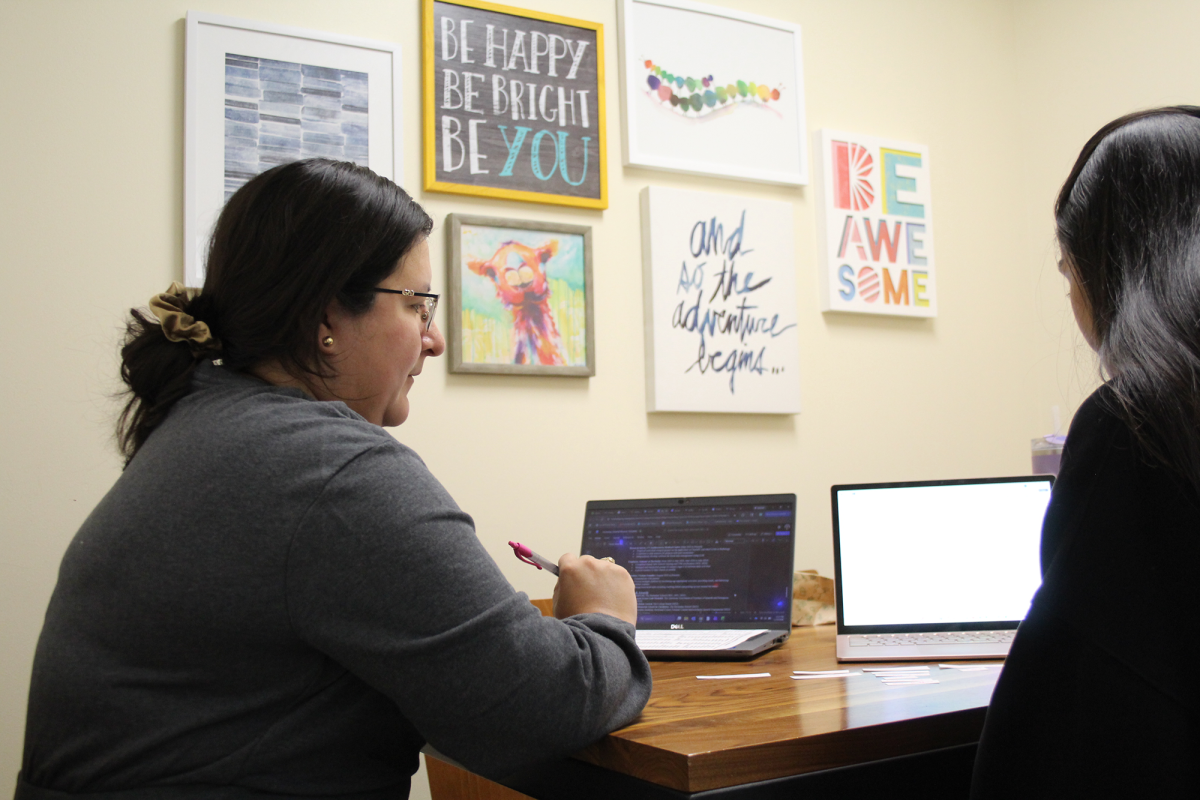




























The door to Upper School Counselor Mrs. Ashley Ferguson’s office is always open, but rarely ever quiet. Between comforting anxious students, talking to parents, and collaborating with other teachers, no two days ever look the same.
“I get to work with whatever comes in the room,” Ferguson said. “Whether I’m called to the Health Center to offer counseling support or talking with students in my office: that’s what I enjoy the most. It’s never the same day twice.”

Ferguson has been an Upper School counselor for eight years. Before becoming a school counselor, she worked as a trauma therapist at Genesis Women’s Shelter and Support, proving trauma therapy to women and children who were housed there. After noticing how therapy and school environments often failed to collaborate, she wanted to help bridge that gap.
“I found that when those two worlds worked together, students did significantly better emotionally,” Ferguson said.
Her work now revolves around helping students manage the inevitable pressures from grades, college applications, friendships and expectations. Ferguson does this all while creating a space for students to feel safe.
“Counseling is a very personal experience,” Ferguson said. “Vulnerability is hard, especially with a stranger—so I start with building trust with anyone who comes in my office.”
Most days, the stories she hears follow a similar theme: exhaustion. Whether it’s burnout from trying to balance too much, or anxiety from trying to be perfect, Ferguson said she sees the same struggles constantly repeated, year after year.
“Some years burnout is more prevalent, some years anxiety is at the forefront of the concerns,” Ferguson said. “But similar challenges always seem to come through the door.”
Ferguson said the best moments for her are often at the end of the year.
“Watching those same students walk across Graduation Terrance reminds me why I do this,” Ferguson said. “It’s always reaffirming to me when I tell my students that nothing lasts forever. While this period of anxiety, or this period of burnout feels like an eternity, there is a light at the end of the tunnel; it does get better.”
She consistently reminds students that balance isn’t something someone can give them, but instead, something they must find themselves.
“I can give you tools,” Ferguson said, “but you deserve all the credit for figuring out what actually works for you. This is their story to tell, not mine to share.”